
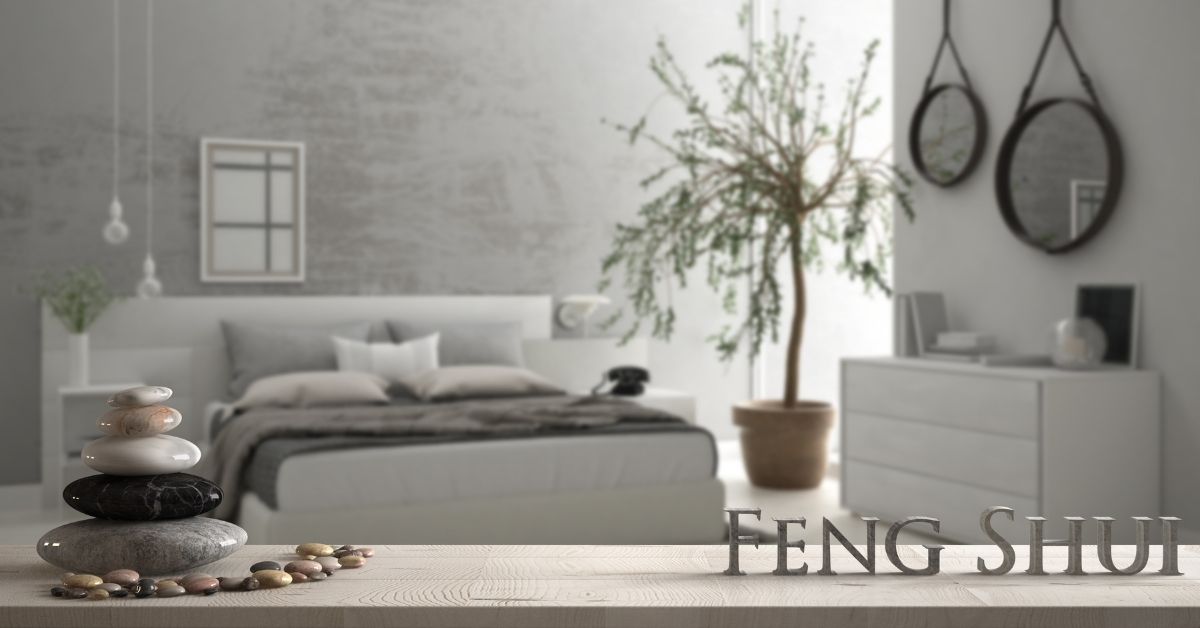
How to Create a Feng Shui Floor Plan Layout Correctly
The concept of Feng Shui has gained widespread popularity among US residents over the past decades. This is due not only to the fashion for oriental ideas but also to the fact that the principles of Feng Shui allow many people to correctly distribute zones in their homes.
The balance of chi in Feng Shui can be influenced by every object in the house. Feng Shui house layout divides it into functional areas. Each such zone should be used for specific needs to ensure the harmony of chi energy. According to the teachings of Feng Shui, energy imbalance leads to earthly misfortunes.
Feng Shui is not a religion. This is a teaching on how to create harmony in everything that surrounds a person and, first of all, in his home. The correct design of the space in the home helps with inspiration and rejuvenation.
Feng Shui does not give one hundred percent guarantee that if you put a vase of flowers in a corner, it will save you from failure and fill you with harmony. But this teaching helps to understand why every object in the house should have its place.
[instagram-feed]Feng Shui Floor Plan Layout
Undoubtedly the most convenient way to plan a Feng Shui floor plan layout is planning during the construction phase of a house. However, this does not mean that the tips below will not be relevant for those who are planning to buy an already finished home. I know the principles of Feng Shui, you can select a house to buy with a suitable layout.
The northern part of the house is considered a career zone, while the south is considered a zone of self-expression and glory. Therefore, both of these zones are great for a home office location. In addition, if you choose the northern part of the house for your office, then in the southern part you can place prizes and certificates received for any achievements.
The western part of the house, in China, is associated with creative realization and children. An excellent option would be to equip a children’s room or a room for creativity here. In it, you can make art and get inspiration.
The east is a very important part of the Feng Shui home layout. This area is responsible for mental and physical well-being. Therefore, it is recommended to have rooms here in which the whole family likes to gather, for a joint pastime. A variant of such rooms is a living room or a kitchen.
It is also a good idea to place your living room in the center of your home. She will personify the heart of your home, where you can spend time with the whole family.
Let’s also consider what is best to place in the corner parts of the house. The northwest part of the house in Feng Shui is responsible for travel and assistance. It would be practical to place a small room in this part for storing camping equipment and home care equipment. For example, it can be bicycles, tents, travel bags, iron, vacuum cleaner, etc.
The southwestern part of the house would be an ideal place for furnishing a bedroom. This sector is responsible for love and passion.
The southeast is a zone of wealth. Chinese sages recommend equipping a work desk and a safe here, this contributes to the preservation of wealth in the family.
In real life, it is very difficult to fully follow the rules of Feng Shui. This is because the arrangement of rooms can most often be planned only at the stage of building a house. But do not give up, because you can often achieve a positive effect in Feng Shui home layout even by rearranging furniture. For example, in the area for children, you can arrange a children’s playroom or install a desktop in the implementation area, and so on.
Sharp corners in Feng Shui Home Layout
The doctrine of Feng Shui has a negative attitude towards the presence of a large number of sharp corners in the house since it is believed that this affects the accumulation of negative energy in the house. Because of this, it is recommended to build a house with the most streamlined shape. Of course, it is worthwhile to understand that in most cases we call in to live in a finished house. In addition, sometimes it is impossible to redevelop the walls due to many factors, such as architectural plans, design, or if this is a rented housing.
In this case, several tricks will help you visually hide sharp corners. For example, you can hang several bamboo sticks tied together with a red thread in the corner, which will hide it.
Another popular solution is to place large indoor plants in the corner that hide it as much as possible. In addition, you should be extremely careful with plants. Chinese sages believe that plants cannot absorb bad energy for a long time. Therefore, when the first symptoms appear on the plant, it is worth removing it away from sharp corners. This will allow the plant to recover, while another flower can be placed in this place.
Sharp corners mustn’t face critical areas. These areas include a desk, bed, sofa, and other places where you spend a sufficient amount of time. Try to arrange everything so that the sharp corners of the doorways do not point in this direction.
To get rid of as many corners as possible, you can use your imagination. Use various decorative elements and other things that will also help you decorate the room without violating the integrity of the interior in your home.
4 Basic Rules for a Feng Shui Floor Plan
The teaching of Feng Shui gives us the knowledge of how to equip the space of our home to get more out of it. By following these rules, you can create a home that will help you restore vitality and strength.
Some basic rules will help you decorate any room, regardless of its purpose. By observing them, you will get a harmonious home that will inspire you.
Minimalism and Open Space
Chi in Chinese Feng Shui is considered positive energy, the correct flow of which depends on many factors. This energy, according to the teachings, contributes to financial and family well-being, as well as helps to recuperate. Hence, this is the most important positive energy in Feng Shui and it is important to create conditions under which it will fill the whole house.
To achieve this, free space is essential. In addition, this does not mean that you need a large house, it can also apply even to small apartments.
The main principle of how to achieve this is to maintain cleanliness. Make it a rule for yourself to get rid of and not keep old, unnecessary things at home. Do not store old newspapers, clothes, dishes, etc. Feng Shui home layout means lots of open space. Get rid of unnecessary furniture and do not oversaturate the room with unnecessary decor, 2-3 elements will be enough for an average room.
All this will fill your room with positive energy. Plus, being clean and free of old clothes will have a positive impact on your health and emotional well-being.
Windows are an Important Part of Feng Shui
According to the teachings of Feng Shui, windows are an important part of every room. Together with natural sunlight, positive chi energy enters the room. Therefore, each room must have windows and preferably large ones.
It is also necessary to keep the windows clean. Dust and streaks interfere with the normal flow of light and are also believed to attract negative energy. The protective grilles also attract negative energy. If you are not sure of their need, then it would be good to remove them.
In modern houses, we can often find almost closed windows. Blinds, roller shutters, and dark massive curtains are very popular. All this is very possible, but according to Feng Shui, such a design is not considered correct. The best solution would be to use light, light tulle, and curtains that will let in a lot of sunlight.
Do not forget about the windowsill, do not instruct him with a bunch of flowers and various decor. If you are very fond of flowers, then place 1-2 small pots, but do not make a flower bed out of the windowsill. Minimalism is important in everything, even in such small areas of the room.
Placement of Mirrors
Mirrors are an essential element in every home and we use them every day. In addition, the mirror serves as a decorative element in the house. According to Feng Shui, there are several rules for the placement of mirrors.
Mirrors should be placed at a certain height. This height is calculated based on the height of all family members. It is important that the reflection in the mirror fully shows the person’s head without cutting off part of it. Therefore, the best option would be to hang the mirror slightly higher than the tallest member of the family.
It is not recommended to place mirrors in front of doors, especially the entrance. This placement of the mirror will push chi energy out of the house. If you are placing a mirror in the kitchen, then it should be opposite the dining table. This placement helps to increase the well-being of the family.
As with everything in the house, mirrors should be looked after responsibly and kept clean. Chips, dust, and streaks distort the reflection, which is considered unacceptable according to Feng Shui principles.
Arrangement of Green Areas
As we mentioned earlier, in the Feng Shui floor plan layout, a special place is given to living plants. But not all plants are recommended for use in the home. According to Feng Shui, there are several tips for arranging flowers in your home.
The most important rule is to monitor the health of plants, they need proper care. As for the choice, it is recommended to use plants whose leaves are directed upwards. Such plants can activate positive energy in the home.
It is also believed that plants are divided according to their energy and plants with masculine energy are great for the office and living room. As for plants with feminine energy, they are recommended for use in the children’s room and the kitchen. And remember that an approximate number of male and female plants in the house is desirable.
When choosing plants, it is also worth remembering that large and fruiting plants emit much more positive energy than decorative ones.
How Feng Shui can Help you
In general, creating the right Feng Shui floor plan layout is not a difficult process. You just need to understand all the principles and study the information, and then start transforming your home. You don’t have to try to remodel the whole house right away. You can start gradually based on which areas you feel uncomfortable in. If the problems are related to the financial component, then first of all take care of the office, but if with rest, then take care of the bedroom and living room areas.
The main thing to remember is that Feng Shui is a recommendation. By following them, you can fill your home with favorable chi energy, which will create the necessary atmosphere in the house, and you will have to work on improving your life situation on your own.
latest video

news via inbox
Nulla turp dis cursus. Integer liberos euismod pretium faucibua