

Outdoor In Ground Pool Installation Cost For Average House
Average in ground pool installation cost for regular backyard home is $37 000. This includes preparation, construction and additional items for service and cleaning. More expensive options with high end materials and equipment can be as high as $65 700 based on our calculations. See below table with full breakdown.
An outdoor pool at home is definitely a luxury item. To add a pool you first of all have to have large enough property and enough money to actually build it. Once the pool is completed your expenses do not stop. You need to clean it and maintain throughout every season with changing water, closing pool in areas where winter comes with snow and low temperatures, add chlorine and many more.
Here are the steps for installation of outdoor pool:
| Economy | Average | High End | |
|---|---|---|---|
| Demolition | $0 | $2 000 | $8 000 |
| Excavation | $5 000 | $7 000 | $11 000 |
| Stabilizing Ground | $0 | $500 | $1 500 |
| Concrete/Block Foudnation | $9 000 | $13 000 | $17 000 |
| Plumbing and Electrical Lines | $3 000 | $4 000 | $6 000 |
| Heating | $0 | $2 500 | $6 700 |
| Waterproofing | $1 500 | $2 000 | $2 500 |
| Finishing Touches | $3 000 | $4 000 | $7 000 |
| Filling up and Testing | $500 | $1 000 | $2 000 |
| Additional Equipment | $700 | $1 000 | $4 000 |
| Total Cost For In ground pool | $22 700 | $37 000 | $65 700 |
We certainly do not recommend attempting to build new pool by yourself. This work is very complicated and should be handled by professionals in pool industry.
1. Demolition by Hand or Machinery
Normally this step is skipped, because outdoor in ground pool installation is in backyard, where nothing else exists but land and grass. On Point Remodeling decided to include demolition for those home owners who have some sort of structure on the way that needs to be demolished before digging for pool starts.
Tool to be used for demolition depends on what exactly is there to be destroyed. If it’s a small deck or shed, you can get away with a saw and sledge hammer. Larger structures with concrete footing or foundation can require excavator to be used for the job.
Demolition is part of construction and you can spend several thousand dollars before any excavation even begins. Those of us who have nothing on our backyard are lucky to save the money in process.
2. Excavation for Outdoor Pool
The actual pool will be in the ground. You do not want to build it on standing platform, because it will not be as stable and it has to hold the entire weight of the water of the pool which can be tens of tons.
Depending on the project size and intention, you may use different methods to excavate the area for the in ground pool installation cost.
The easy way is to hire a company with excavator to do it for you. This is obviously the most expensive way, but professionals can do it fast and safe.
If you know how to operate excavator you can just rent it and dig by yourself. This should not take more than one day and you can save the money.
Excavating by hand is the third option for digging out for outdoor pool installation. It will take so much longer, but If there is not rush, you can save money on this step of process.
3. Stabilizing Ground and Compacting
The soil will be different everywhere. Even in one small city one neighborhood can have clay soil and another can have sandy ground. Once excavated, you will be looking to have your structure on that specific soil and it was disturbed in previous stage when excavation took place.
The best way to stabilize ground in excavated area is to use plate tamper. This mechanical machine is pushed along the surface with constant tamping by flat plate.
You have to be very careful with walls while doing this. Vibration can cause walls to collapse or some soil to move.
Plate temper can be rented in construction equipment stores or in rental sections of home depot or lowes.
4. Concrete Outside Walls for Outdoor Pool
Bottom of the pool and walls have to be made with water resistant material and strong enough to withstand pressure from water.
Most popular way to build these walls is to pour concrete into forms and base slab. What contractors would do is they set up forms for footings and walls where concrete is poured. Rebar are added for reinforcement of walls.
We have seen the walls being made with cinder blocks, which do save costs a little, but the walls would not be as strong. Make sure that your sides and walls do not have sharp edges. Normally the exterior of outdoor pool box is rounded up with extra material to make it smooth.
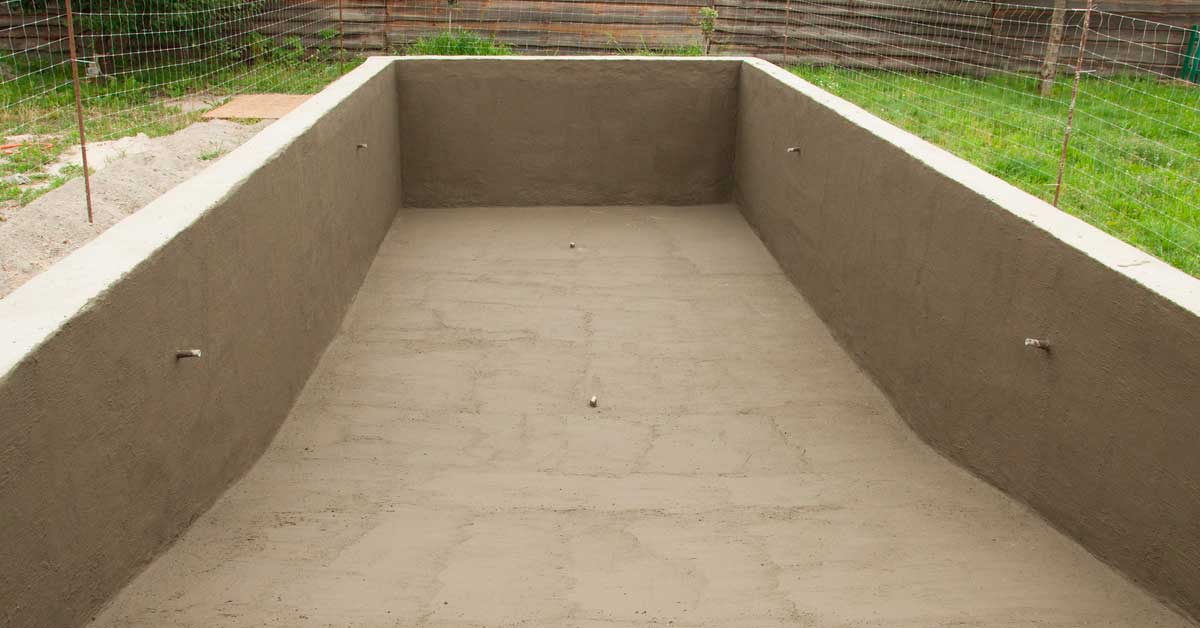
Finished concrete and purging inground pool outdoor.
5. Plumbing and Electrical Lines
Pools have different water and electrical features with designs from very simple pump system to waterfalls and fountains.
Electrical is the same way, you can either have no lines or something very simple, while luxury outdoor in ground pool installation cost can vary and have complicated electrical underwater lighting, connection to fountain lines and many more features.
On Point Remodeling team recommends hiring only licensed professionals for this part of work that have knowledge and experience with pool installations.
All lines should be pressurized and water sealed at this stage. Make sure to test everything several times before moving into sealing and hiding all lines.
6. Heating of Water and Base
Installation of heating in the pool is definitely a luxury add on. For fortunate home owners that spend tens, if not hundreds of thousand dollars for pool, heating option will be a must.
In colder regions we see heating system for the pool more often, but there are those who want them even in southern cities, where temperature is always hot.
There are two ways to heat up your outdoor pool at home. Most common way is to use electrical or gas heater to worm up the water in the pool. Other option which is more popular in colder states is radian heat in tubes.
The way radian piping works is before concrete is poured, plastic water tubes are installed inside the walls and floor (in concrete deck near the pool too). They get pressurized and tested before concrete is installed on top. The water in tubes is connected to water heater which warms concrete walls and floor from inside.
7. Waterproofing and Leak Protection
Sealing up the exterior of the pool is very important for leak prevention. Walls may have tiny cracks, which can expand in time and leak water if walls are not waterproofed.
One of the problems that can arise if you do not water seal the pool is the filled in water may leak out and you will need to constantly refill it again.
The other issue, which is even more serious, is the water from soil may leak inside of the pool. This is a major problem, because all water will be always dirty.
Water sealant is wrapped on the outside pool wall and on laid on the floor before concrete is poured. This material has many brads and types. Ask local suppliers for information on water sealant matts for outdoor pool installation.
8. Finishing Details In Ground Pool Installation Cost
When the box of your new pool is complete with necessary plumbing and electrical lines it is time to finish it up and look pretty.
The material you can use for decoration and finish can go as far as your imagination. You an find different types of stone, tiles, plants, lights, fountains and other decorations to brighten up new pool.
The most cost effective way to finish pool is decorative painting and few liens of tiles closer to the top edge, where water lines meets the top of pool.
Modern finishes can be more expensive and if your budget allows you to spend more money than average new car, you can get very fancy pool finish job.
9. Filling Up and Testing
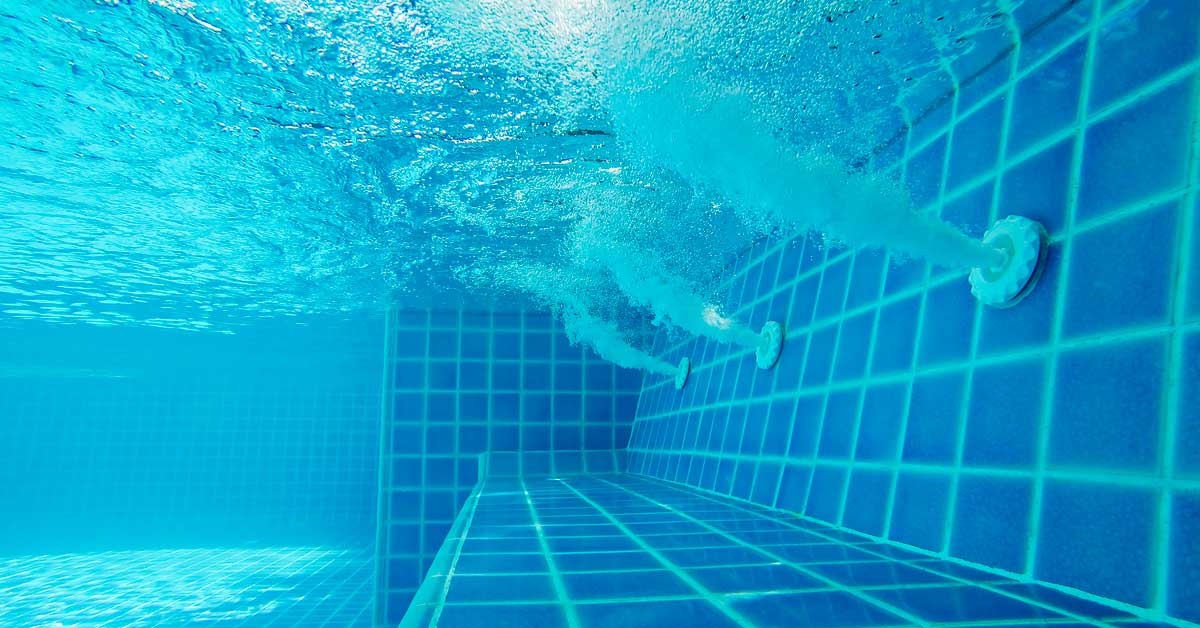
System is checked and pool filled in for testing
When everything is finally complete there is one more thing to do and that is to fill it up with water. Get a hose into your new pool and fill it up all the way up. It will take a long time but be patient.
Before you can use, you have to test everything. This step is crucial because if something is wrong you want to catch it right away.
For first 48 hours we recommend testing the pool for any possible leaks. Measure the level water on the side wall of your pool with something like a marker or water resistant tape.
Compare it next day and the following day. Obviously the water goes down just a little because of evaporation, but you should be able to spot a leak. Check weather network and make sure you are not doing this on rainy days.
10. Protection and Extra Equipment of Outdoor Pool
For maintaining new pool and having it clean all the time you will need to get some equipment. The cover is one of the first thing people think of getting and they are not wrong.
Cover your pool from falling leaves, snow, storm or during high winds that can drag dirt into the pool. Simple cover would do the trick, but you can find high tech automatic coverings that expand with a push of a button.
Very cool and popular item for pools is automatic robot that cleans pool underwater. It literally goes from one side to another collecting waster that is accumulated on the bottom of the pool.
Extra equipment you may need for casual cleaning such as telescope pole with net at the end, underwater cleaner (works just like vacuum cleaner), chlorine, brushes to clean walls and many other things that you can find online or in hardware store.
11. Combined Cost for New In Ground Pool Installation
Most popular questions On Point Remodeling subscribers ask are always cost related. We understand that before building something you would like to understand how much it costs and what to expect.
All projects are different and all home owners have different budgets they want to spend while committing to this job. And it all comes down to how complicated the pool is and are you hiring someone or doing part of the job by yourself.
Standard in ground pool installation cost in average home backyard is $37000 from demolition to finishing stage with extra equipment for cleaning.
If you are trying to do it by yourself you can save ton of money, but you have to know exactly what to do and how to do it. DIY project can cost on average $18000 for rental equipment, materials required and finishing details. Even in DIY pool project we recommend hiring licensed electrician and plumber.
Conclusion
Before signing contract for installing an outdoor pool at home we suggest interviewing at least 3 companies in your area and getting quotes for exactly the same scope of work.
You have to compare apples to apples because one company may include extra features and have overall cost slightly higher than companies that don’t include it.
Pool projects may require architectural drawings and building permits, depending on complexity and your local building codes.
Extra material can be found on our website and if that’s not enough, our staff can always be reached by email for more detailed information and suggested contractors or materials.
latest video

news via inbox
Nulla turp dis cursus. Integer liberos euismod pretium faucibua