
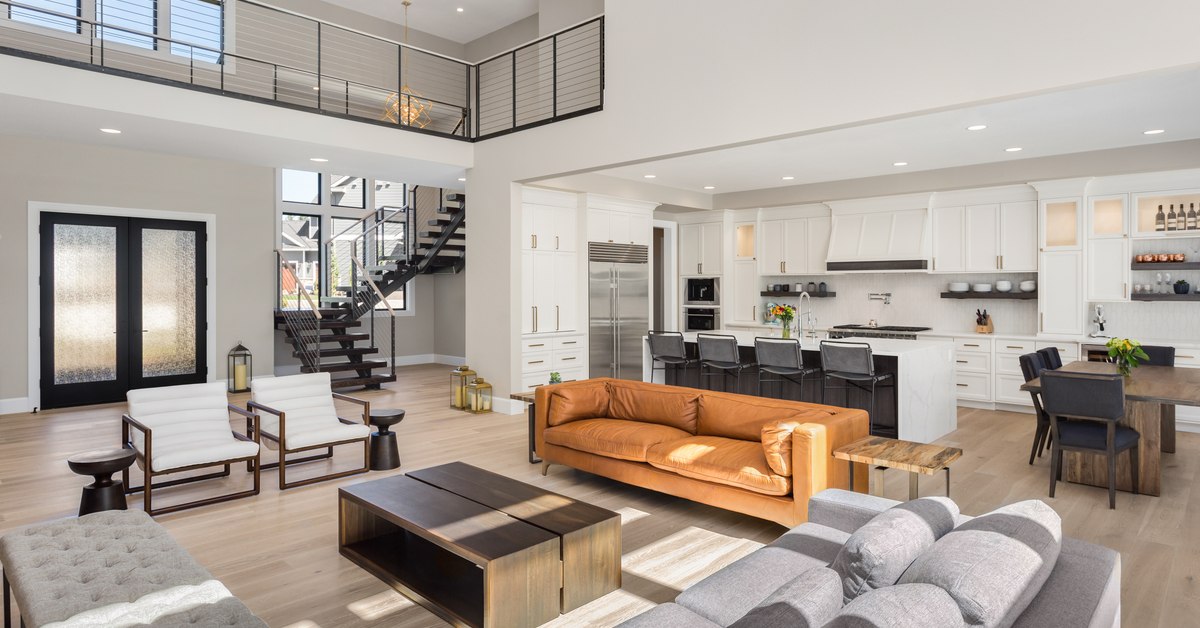
Open Concept Kitchen Pros and Cons

Open Concept Kitchen Pros and Cons for House and Apartments?

Last Updated: 2021-08-11By

The development of the concept of open spaces in the house is gaining more and more popularity in our time. Did you know that just a few decades ago this type of layout in the house seemed strange and unusual?

It has to do with the way society works. In the modern world, we are less and less building boundaries between people and becoming more open with each other. This is also reflected in trends in housing planning. Open space is more and more fascinating, because of this, open space kitchens combined with a living room are becoming more and more popular.

Like any other layout, can be open concept kitchen pros and cons. Let’s take a closer look at what helped these types of layouts gain more and more popularity. And also we will figure out what difficulties you may encounter when implementing them in the house.

[instagram-feed]

For what people like open space kitchens

Ability to combine rest and cooking

You have probably come across the fact that while watching your favorite TV show or talking with family members, there came a time when, unfortunately, it was necessary to go to cook. It was very frustrating at times, as people don’t like to be interrupted during pleasant moments.

In the presence of an open kitchen, this problem can completely exhaust itself. Due to the lack of walls, you remain all in the same room. You can also watch TV or chat with a loved one. Cooking will no longer limit you and you will be able to combine these processes.

Great place to meet friends
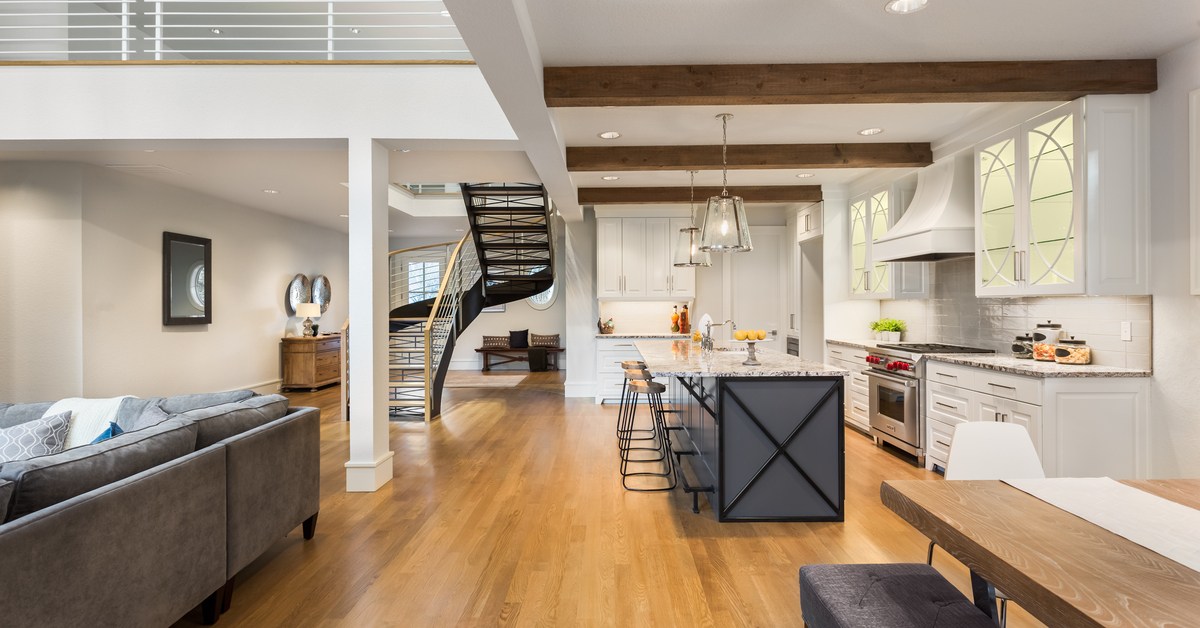
Great place to meet friends

Open kitchen best place for a home party with friends.

It is very pleasant to spend time with friends, especially when there is no need to go anywhere for this. Creating an open kitchen in this case makes your home much more functional. You have the opportunity to have fun with friends in the living room and use the kitchen. For example, a kitchen island can be a great place to hang out with friends while listening to music or watching an interesting movie.

Even if you feel more comfortable in the living area, you will have quick access to snacks and drinks in the kitchen. If you wish, you can use the kitchen island instead of the bar counter, and your home parties will be spoken of with admiration.

The opportunity to share the beauty of the interior and things

Since we have already started talking about receiving guests, it is also worth mentioning the fact that you can show off the interior of your kitchen. Beautiful kitchen items, dishes, and decor will surely attract the eyes of your guests.

This can be a great topic for dialogue. This topic is very interesting in women’s circles. Also, all this will be easy, because you do not invite guests into a separate room, but everything is in their sight.

Gives a feeling of more space

One of the important positive aspects of an open space kitchen is the lack of walls, which creates a lot of space. This is a very important detail in small houses or apartments, as such a feature visually enlarges the room.

You will no longer need to walk along narrow corridors from room to room, the entire floor will be within your reach. Even if at first glance this does not seem like a strong increase, the absence of connecting walls and doors will increase the functional space by up to 40%.

Convenient to babysit

Babysitting is a very demanding process and it becomes a little easier with an open space kitchen. You no longer have to worry about how your child behaves while you are preparing dinner. The child will be able to calmly play in the living room and you will watch him from the kitchen without being distracted from the process.

Plus, when he starts to grow up, he will watch you more. This can help instill an interest in cooking and provide useful skills. And you will have someone who will help you around the house.

The benefits of open space
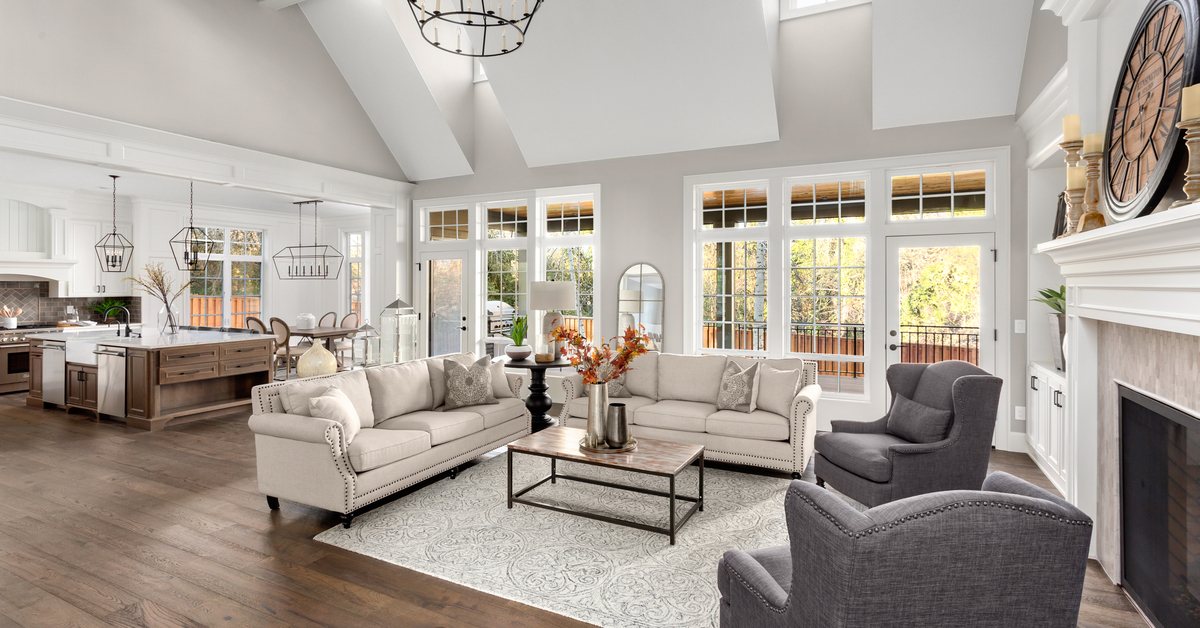
The benefits of open space

Open space kitchen with a lot of free space.

It is very pleasant to be in a room filled with lots of natural light. This is another reason to create beautiful open-plan kitchens. Due to the open space, the light comes from all windows at the same time, both in the kitchen and living room. This feature allows the room to be brighter and brighter.

Also, it is worth noting the importance of high-quality air circulation. It will be enough for you to open a couple of windows and streams of fresh air will easily fill your house with freshness. The presence of natural light and fresh air is very important for health, therefore this is a definite plus in the direction of open kitchens.

House value increase

It is worth mentioning also another positive factor of the open kitchen as an increase in the value of the house. This is primarily because open space kitchens are very popular. Because of this, when selling a house, people will pay more attention to such a house, even if it is more expensive.

Problems with Open Space Kitchen

The need to install high-quality ventilation

Open concept kitchen pros and cons sometimes have a continuous relationship The first difficulty that you will have to face when installing an open kitchen is the design of high-quality ventilation. This is because of the open space, odors from the kitchen can spread throughout the room and cause discomfort.

The same goes for a strong temperature rise. With abundant cooking, the stove and other appliances can reach very high temperatures. This can be frustrating if you don’t have a good HVAC system installed.

Think in advance of all aspects related to ventilation and installation of air fresheners. Then in the future, you will be comfortable using the kitchen without unnecessary inconvenience.

More frequent kitchen cleaning

We already know that beautiful open plan kitchens are great for home parties, but there is also a downside to the coin. During cooking, there can be a lot of dirty dishes and various splashes. Because of this, you will have to be more careful about cleaning the kitchen. Stains on kitchen surfaces and a mountain of dirty dishes will not decorate your home.

Noise from kitchen appliances
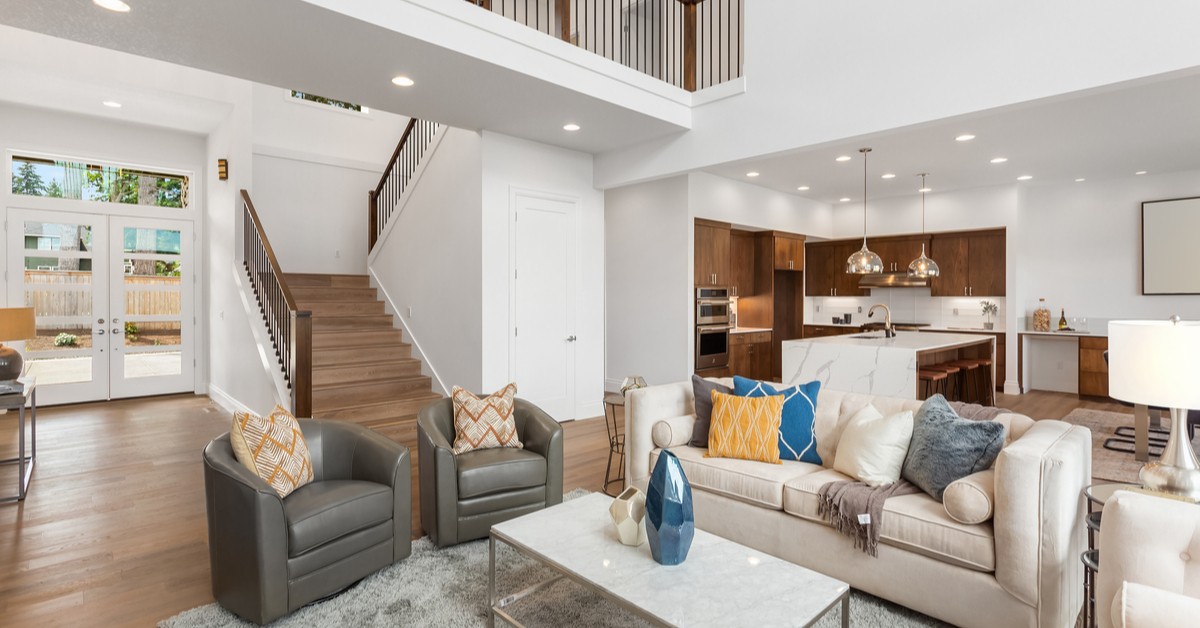
Noise from kitchen appliances

Noise from kitchen appliances can be heard in the living room.

It is very convenient that in the modern kitchen many appliances facilitate the cooking process. It is also worth remembering that all these electrical appliances make a lot of noise. In this case, you should accept the fact that due to the absence of walls between the kitchen and the living room, this noise will be heard throughout the common room.

Don’t worry too much about this. If you don’t cook often, or you can do it without disturbing other family members, then this should not be a problem.

Less storage space

Another possible disadvantage to consider is that there are fewer cabinets for storing kitchen utensils. This is due to the lack of walls to hang them on.

In this case, if you still do not have enough small kitchens, you can consider the option with a kitchen island. The kitchen island is very easy to use and has special storage compartments.

More complex interior design

Since the living room and kitchen are now one whole, then in terms of design it is worth considering these rooms together. It is very important that the interior of the common area is combined and not very different. Remodel on point recommends in this case to consult with an interior designer at the stage of renovation. A good specialist will help you create an interior that you like.

Conclusion about Open Concept Kitchen Pros and Cons

From all of the above, it follows that the growth in popularity of beautiful open plan kitchens will only increase every year. This is very logical because they have several advantages over closed kitchens.

In the modern world, people choose in favor of simplicity and functionality, and it is the open kitchen that gives them. You can juggle your chores cooking and watching TV or babysitting, hanging out with friends in a large combined room with access to the entertainment area and kitchen table, and more. Open space will make you feel more comfortable even in a small apartment, and it costs a lot.

In contrast to all this, there are not many things that can cause inconvenience. Plus, with the right approach, starting with the renovation phase, you can avoid most of them. Everyone chooses for himself what type of cuisine he likes best, but we recommend doing this after considering all open concept kitchen pros and cons.

editor's pick

latest video

news via inbox

Nulla turp dis cursus. Integer liberos  euismod pretium faucibua

Each building has some sort of driveway or at least should have. The main reason is for vehicles to come closer without need to walk all the way. Some homes are residential with small driveway for their car to come in and park before garage or front entrance, and others can be large commercial buildings with loading docks, delivery entrances and casual parking entrances. On Point Remodeling was asked for suggestions on residential driveway for new home construction, and we decided to write detailed article for all our readers. Using this guide you can select the material for your driveway and see what works for your budget. Here are the materials for driveway we will be discussing in our guide:
  • Asphalt
  • Concrete
  • Paver Stone
  • Crushed stone
  • Brick
  • Seashell
  • Gravel
To find good contractor for your driveway, you can either ask our team by email or try to find someone local that worked with neighbors or nearby buildings.

Installation process of any material surface on your driveway

a) Demolition and Excavation – Before anything is done, your contractor will get heavy machinery and scratch off old layer of driveway. They need to go down at least 5-6 inches to insure proper layering before your final layer of material is installed. b) Material Purchase and Delivery – At this point your contract is signed and you already know how the surface will look. Contracting company purchases necessary materials and delivers them to site. Double check if material is correct and not damaged. c) Preparation of Sublevel – Whatever you place as final material, it cannot just be installed directly on top soil. Gravel is the first choice of material that goes down at this stage. Other preferred material is screen sand that can go on top of gravel and works better with stone and bricks. d) Compaction of Ground – To prevent your driveway from moving and changing shapes, all the layers from bottom up have to be properly compacted. Do not leave any spot untouched while doing this or you can get small holes and cracks in driveway after installation. E) Final Installation – This is when all the magic happens. After all preparations and dirty work the final installation is made literally within hours and you can enjoy new driveway. Stone and brick is set up by hand, while other materials require some sort of machinery with manual labor to even out surface.

1. Asphalt

Probably the most used material for road top surfaces as well as driveways is asphalt. This is a mix of gravel and sand that is mixed in and combined by asphalt cement with crude oil. Pros of Asphalt Driveway
  • Very popular and easy to find materials/contractor
  • Completed in 1 day and you can drive on it after
  • Patches and small holes can be fixed fast
Cons of Asphalt Driveway
  • Easy to damage and cracks appear in few years
  • Almost everyone else has same surface
  • Oily surface and chemicals used in mix
Prepared for asphalt driveway will cost you around $5 per square foot to finish. The contractors that take care of entire process from taking out old driveway surface, install subsurface and compact the ground with new asphalt on top, will charge on average $5500 per regular size driveway at single home property.

2. Concrete

What we call concrete is a mixture of Portland cement, aggregate as well as sand with gravel. Suggested thickness of concrete for driveway is 6 inches. The mixture needs to cure without being touched or driven on top for several days. Pros of Concrete Driveway
  • Durable material for large weights
  • Long lifespan if installed properly
  • Winter and summer friendly
Cons of Concrete Driveway
  • Has marks and stains over time
  • Hard to repair without replacement
  • Super hard to DIY
To hire contractors for concrete driveway it will cost around $7-$9 per square foot. This will include site preparation with gravel spread and new concrete installation. They will order full truck of concrete (or several for larger driveways) to pour inside forming. Smoothening and curing is required after installation.

3. Paver Stone

The most luxurious material that you can use to create driveway path with is paver stone. It is made out of natural stone with uneven rough shapes that have different line patterns. Paver stones are very heavy and are perfect for weights on top of them. Almost every city in Europe has roads and walks made out of stone that were installed centuries ago. Pros of Paver Stone Driveway
  • Creative designs can be done
  • Personal looks, can match the house
  • Can replace single stone in minutes
Cons of Paver Stone Driveway
  • Weeds growing through
  • Stone can move over time
  • Most expensive material
There is wide selection of stone that can be purchased for your driveway. On average we recommend settling with $17-$20 per square foot for stone with installation included. Working with this material is very intense labor and we recommend hiring professionals that do this type of work every day.

4. Crushed Stone

Our readers sometimes mistake crushed stone with gravel, but this is not the same material. Crushed stone material is achieved when machine is mechanically crushing larger pieces of unused stone for this specific purpose. It is larger than gravel and can have smooth finish. Crushed stone can also have a mix of colors, which is much pleasant to eyes than gravel. Pros of Crushed Stone Driveway
  • Low maintenance required
  • Fits rural area style
  • Can be reused for other purposes
Cons of Crushed Stone Driveway
  • Gets very hot during summer
  • Can be messy after many drives
  • Hard to remove snow and ice
Buying crushed stone and installing it on your driveway is as easy as it gets. Similar to other rough materials discussed in this post, only small tools like shovels, dolly and buckets are required to spread it on the road. The cost of crushed stone driveway is between $4 and $6 per square foot from professional local contractors that can finish the job in several days.

5. Brick

The same brick we see being used in wall construction can be installed as top driveway surface. Brick is manufactured by compressing clay with plastic mass. It is heated to extreme temperature and dried up to become as solid as you know it. Pros of Brick Driveway
  • Variety of selections in shapes and shades
  • Bricks are recyclable
  • Slip resistant with rough top part
Cons of Brick Driveway
  • Needs regular maintenance
  • Change color over time
  • Old fashion looking
Installing brick on driveway costs $10 per square foot, which is not too far from masonry brick laying as part of the wall. To save money you can use or purchase old brick, that was part of a wall before. Do not mix these two jobs and contact landscaping professionals instead of masonry contractors that work with bricks.

6. Seashell

This material is popular on the coast line where shells can be found near the water. Construction companies use seashells to add in other materials as well as spread them on driveway in rough condition, without adding anything else. It usually comes in white or pearl color and darkens within year because of mixing with sand and dirt. Pros of Seashell Driveway
  • Environmentally friendly
  • Has natural drainage
  • Creates worm vibe of beach house
Cons of Seashell Driveway
  • Break and crack under light weight
  • Sharp and very hard to walk on
  • Gets stuck in shoes and tires
To deliver and spread seashells on driveways costs below $4, which is only slightly more expensive than rough gravel. As you go further from coast line, cost of material increases due to delivery. This material is elegant and very soft. We recommend adding edge lines with darker color landscape material to create visual path.

7. Gravel

This material is used in other construction mixes and underlayment systems. It’s literally fragments and small crushed stones that are put on top of soil. It is easily spread out by hands and anyone can do it. Pros of Gravel Driveway
  • Cheapest of them all
  • Easy DIY Job
  • Can install another material on top
Cons of Gravel Driveway
  • Needs to be graded very often
  • Will mix with dirt and leaves
  • Washes up with heavy rains
It is rough material and can be purchased in bulk (by metric tons or cubic meters). The cost of driveway with gravel should not exceed $3 per square foot, but you can save tons of money by purchasing materials and doings installation by yourself. You do not require specific tools or heavy equipment for the job and delivery of gravel can be arranged directly to your project.

Conclusion

To properly finish any and all of these driveways requires skills and experience. There is no way you can complete any of these projects without heavy equipment and tools that regular home owner’s just store in their garages. Most of those who will read this post will prefer to install asphalt driveway, because of its popularity and low costs. We want to encourage home owners to go for personal preference and what matches your house, rather than getting the most affordable and popular items. Driveway jobs have to be completed fast; otherwise you will need to park elsewhere while the project is running. To not overpay, ask us for quotation sample on material you prefer in specific region where the work need to be done and our team can provide some numbers.

Leave A Comment