

How Long Does it Take to Remodel a Kitchen in Average Home?
To remodel average size kitchen it takes 22 full working days by contractors specialized in kitchen renovations. This includes complete demolition and installation of new cabinets with new necessary rough ins. Managing trades on your own or doing DIY work slows down project by 7-8 days.
Remodel On Point provides table with how long does it take to remodel a kitchen stages. Every kitchen has different size, but we went with slightly larger size that new homes would have. Out table and overall article information is based on 35 linear feet with an island.
Here is a table with suggested timelines for kitchen remodeling process:
| Kitchen Renovation Company | Hiring and Managing Trades | |
|---|---|---|
| Demolition | 2 Days | 3 Days |
| Framing | 1 Day | 1 Day |
| Rough Ins | 3 Days | 4 Days |
| Walls and Ceiling | 4 Days | 6 Days |
| Flooring | 1 Day | 2 Days |
| Kitchen Installation | 8 Days | 10 Days |
| Completion | 3 Days | 5 Days |
| TOTAL TIME | 22 Days | 31 Days |
Follow the link in main menu for custom design and see what can be done for your kitchen. Remodel On Point designers provide full scale drawings and detailed list of materials and contractor assistance.
[instagram-feed]How Long Does it Take to Remodel a Kitchen Explained Steps
In the table above you can see short description of timelines for kitchen remodeling. For those who want to go deeper into knowing the process here is an explanation. In longer answers we describe how long does kitchen renovation take with professional contractor company?
Demolition and Disposal – 2 Days
Team of 2-3 people can disassemble old cabinets and take down necessary wall structures to reposition layout. Smaller jobs can be demolished in 1 day, but we consider removing floor, nails and gutting kitchen wall to the studs.
Refinishing or Repositioning Walls – 1 Day
In case the walls need extra support or framed differently to adjust for new layout framing is required. With clear plan and instructions framers complete this stage within 1 day.
Rough ins – 3 Days
We always assume that experienced general contractor can schedule plumber, electrician and installation of venting system within the same period of time. They do not conflict with each other and can work together. Everything is done within 2 days and extra day is given for inspection.
Finishing Walls – 4 Days
After behind the walls wires and pipes are done, we want to finish the walls with drywall and mud. Although behind the kitchen cabinets you don’t need perfectly smooth surface, other area needs ideal finishes (side walls and ceiling). In this work we assume at priming or at least 1 coat of paint.
Flooring – 1 Day
Unless the plan is to install tiles all over kitchen floor, we recommend putting flooring as 1 day job. It can be laminate, hardwood, engineered planks or anything else. Tiles require extra day for grouting.
Installation of Kitchen – 8 Days
Larger kitchens like perfection. Although cabinets can take only 2 days to set up, countertop takes another 6 days on top. Ideal measurements for stone cuts are taken after bottom cabinets secured on the floor and production and installation of countertop is around 6-7 days. During that time other cabinets are installed on the wall.
Completion and Finishes – 3 Days
Even after countertop and cabinets are done we think contractors need 3 more days to work. There are things that require touch ups and finishing installations. Its putting in lights, screwing electrical plates, faucets, sink, paint correction and even clean up.
All provided schedules are only for labor at the job site. We always assume that materials have been pre ordered and delivered.
Design Stage for Kitchen Remodeling – Outside of Schedule
For the purpose of comparison and strategically planning of kitchen remodel, we did not include design stage in the schedule above. Planning can be done just before renovation or even a year ahead of time.
Design of kitchen for the most part depends on purpose and idea of the project. If the plan is to create only functional kitchen area for renting purposes it can literally take a day to design and confirm details.
Much longer projects involve complete kitchen remodeling with main thought to create best ever kitchen for yourself and spend future years enjoying it. Designing and confirming everything with home owner can last for weeks and all that happens way before construction begins.
It starts with inspiration and minimum requirements that you try to achieve. What goes behind the scene and hardly ever noticed by clients is the functionality of cabinets and overall kitchen space. We always try to make positioning of drawers with more comfortable use. This plays beg role in how long kitchen renovation takes.
With experience and understanding of all needs for kitchen design, we are able to create plans much faster. Visit our custom design page for more information on new kitchen design with detailed instruction for the work and materials required.
Is City Inspection Required and How Long Is It?
This article is not about refacing or just changing cabinets. Remodel On Point team discusses complete transformation of kitchen space with plumbing, electrical and sometimes structural work. These items need to be completed by trade specialist and inspected with city.
Do not try your luck with unlicensed workers or skipping an inspection hoping for the best. They will make you take down cabinets and show the work behind the walls. This is very devastating news when facing an order that causes thousands of dollars and weeks to redo everything.
Proper planning does not require extra time for inspections. You can simply carry on with next stage work and not waste precious time by moving schedule. For this general contractor or project manager needs to know when work need inspection ahead of time and request it from city or regulatory authorities.
How Long a Kitchen Renovation Takes When You Change Ideas
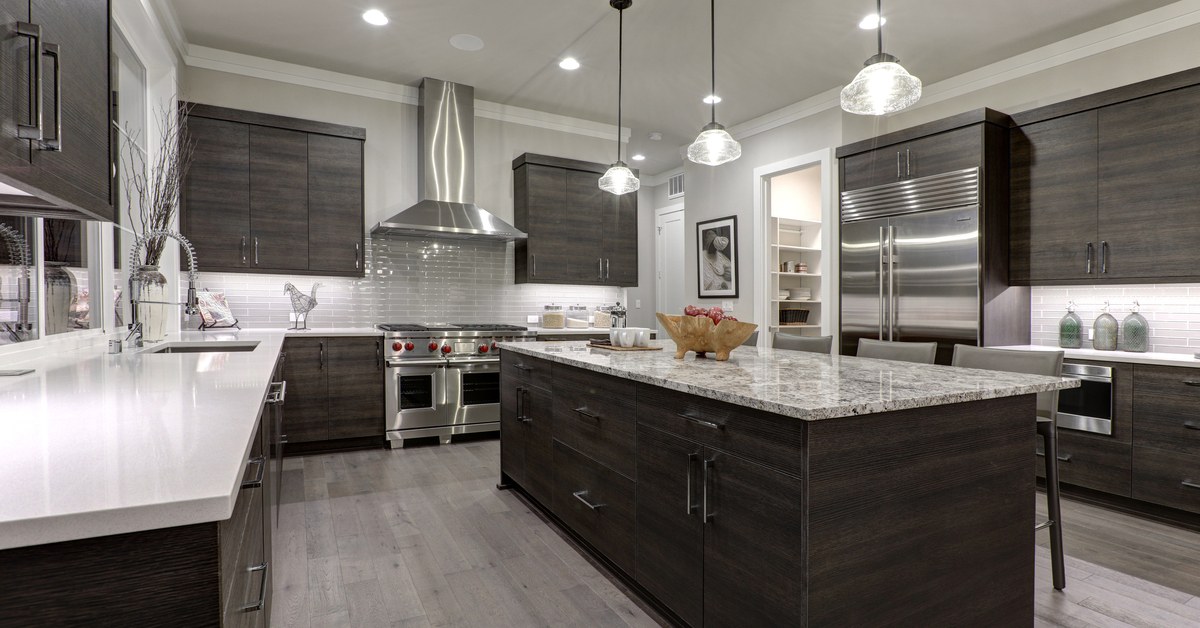
Final walk through in newly renovated kitchen area
Very often we see intense delays because ideas and selections change middle of the project. What seems to be normal for home owner is sometimes a nightmare for contractor during remodeling jobs.
Imagine that suddenly home owner changes mind on positioning of kitchen cabinets and want to move everything 6 inches. How hard can it be they say? Probably extra day of work and few hundred dollars.
On top of changing entire schedule for each trade, all rough ins may need to be moved. Just think about redoing that and getting inspected once again. Project manager has to be compensated for extra time spent. Easily the job would be delayed for another week if not more.
Same goes for all other small or big changes that involve redoing some work or shifting schedule because materials that were selected before need to be exchanged.
These doubts happen due to poor preparation and overall plan. Remodel On Point team helps with creating complete list of materials and fixtures for kitchen remodeling. With our design you will never have to change your mind and delay the job.
Managing Contractors and Trades on Your Own
Let’s say that you want to try and eliminate general contractor and save some cost. That can definitely work, but how long does it take to remodel a kitchen when managing the process on your own?
Can home owner with average knowledge and skills perform with similar speed as kitchen renovation company? Typically not, but there are ways to speed up the production and have it complete within fair timeline.
The whole idea is to prepare way before starting work and having a checklist with schedule going. Can you become a manager if you are told exactly what to look for? It comes with either experience or clear instructions of remodeling process.
There are kitchen remodeling contractors that have in-house team to complete most or all the labor. Those are impossible to beat in speed, but home owners can definitely achieve general contractor level and get job done within same time.
How Remodel On Point Can Save Time During Kitchen Renovation?
On average kitchen renovation project we can save 6-8 Days of time and up to 30% of the cost for medium or large kitchen remodeling projects.
Our team has been helping home owners and general contractors with design packages for kitchen upgrade. Doesn’t matter where you are and how complicated the job is. We are able to break down the job into little steps and provide complete guide specifically for your kitchen remodeling.
By including complete drawings of cabinets and overall renovation area we eliminate unknown concerns that may come up. Our method works best for increasing speed and working within tightest budget.
Other Delays in Kitchen Renovation Jobs
We are talking about a large job that involves multiple trades and materials worth tens of thousands dollars. Time delays can come from any corner and we want to mention several popular ones.
No matter how good installers are and how high the quality of material is, damages and mistakes happen even to the best of us. Never assume a perfect job because they do not exist.
While planning and purchasing materials ahead of time always get more. There is nothing worst during the project than shortage of tiny bit of material that hold the entire project and nothing can’t be done until it arrives from supplier.
Inexperienced project managers tend to mix up schedules of trades for work and have them come back another time. Sequence is very delicate factor in kitchen projects and it dictates how long does it take to remodel a kitchen for the most part.
Hiring the cheapest contractors is always a good chance for disaster to happen. Saving few dollars can result into poor quality work and much longer performance. We can refer contractors that are efficient and won’t cost you more than you expect.
latest video

news via inbox
Nulla turp dis cursus. Integer liberos euismod pretium faucibua