

10 Different Types of Flooring Materials Used for Your Home and Office
With thousands of reviewed remodeling projects our team has decided to discuss all potential types of flooring for your home. There are plenty of options and depending where you live and your choice of style will define how to remodel your home flooring.
Some floors are literally impossible to install in certain conditions and some we recommend not doing for simplicity or possibility of damages.
Here are top 10 popular floors in America for our discussion:
| Type of Flooring | Benefit | Installation Cost | Material Cost |
| Laminate | Easy to install | $1.2 / sq ft | $2 / sq ft |
| Hardwood | Can Refinish | $1.6 / sq ft | $5 / sq ft |
| Engineered | Withstands weather | $3 / sq ft | $6.5 / sq ft |
| Carpet | Soft and worm | $1 / sq ft | $2.5 / sq ft |
| Tiles | Very Durable | $8 / sq ft | $6 / sq ft |
| Stone | Fashionable | $10 / sq ft | $7 / sq ft |
| Concrete | Easy to maintain | $- / sq ft | $7 / sq ft |
| Vinyl | Cheap and strong | $1.2 / sq ft | $2 / sq ft |
| Cork | Noise resistant | $2 / sq ft | $4 / sq ft |
| Rubber | Protects from liquids | $1.5 / sq ft | $6 / sq ft |
On Point Remodeling can suggest your local suppliers and installers for flooring of your choice.
1. Laminate Floor
We can say that the most popular and used types of flooring material used for condo buildings is laminate. To someone not in the industry of flooring or remodeling it may look exactly like hardwood, but there is a big difference.
Even though laminate flooring is cheaper than hardwood, it is more practical in use. It’s more flexible and often used in basements. Laminate does not react to cooler and moist air as hardwood does.
The benefit of laminate floor installation is that you do not need to nail it or glue to surface underneath. It is installed on click mechanism at each side of laminate plank. Since it floats the expansion due to wet and dry air is held much better.
The average cost of laminate flooring is $2 per square foot but you can always find something on sale for less.
2. Hardwood Floor
Good old hardwood can be seen in most of older places throughout US houses. Very rarely hardwood installed in new condos or any commercial spaces. It is not recommended to be used in environments that often change in temperature, air concentration and humidity.
One of the qualities that set this material apart from everything else is the ability to refinish floor years after it is installed. There are floors in some homes that are sanded and stained after 30-50 years of being there.
Regular hardwood is usually nailed to subfloor with tiny nails. Subfloor for hardwood floor in best case scenario is plywood for ability to nail. Hardwood can be installed on poured concrete with glue.
The average cost for hardwood material is $5 per square foot. It can range from very cheap material at $2 per square foot to exotic wood with price tag of $12 per square foot.
3. Engineered Hardwood
Inventions of new materials happen all the time and engineered hardwood was one of the most popular. It came on market about in 1960s and initially was designed for moist and cold areas.
Later on this types of flooring materials caught up with new home builders and home owners with popular colors, designs and sizes of wood planks. Great feature of engineered hardwood that it can be glued, nailed or both with planks larger than 6 inches.
Yes this floor has more resistance to different temperatures and water, but the problem with engineered hardwood that it can be refinished only once or twice if lucky. This work is very precise and in some situations is not even doable.
Engineered hardwood is one of the most expensive products for floor finishing and goes on average for $6-$7 per square foot.
4. Carpet
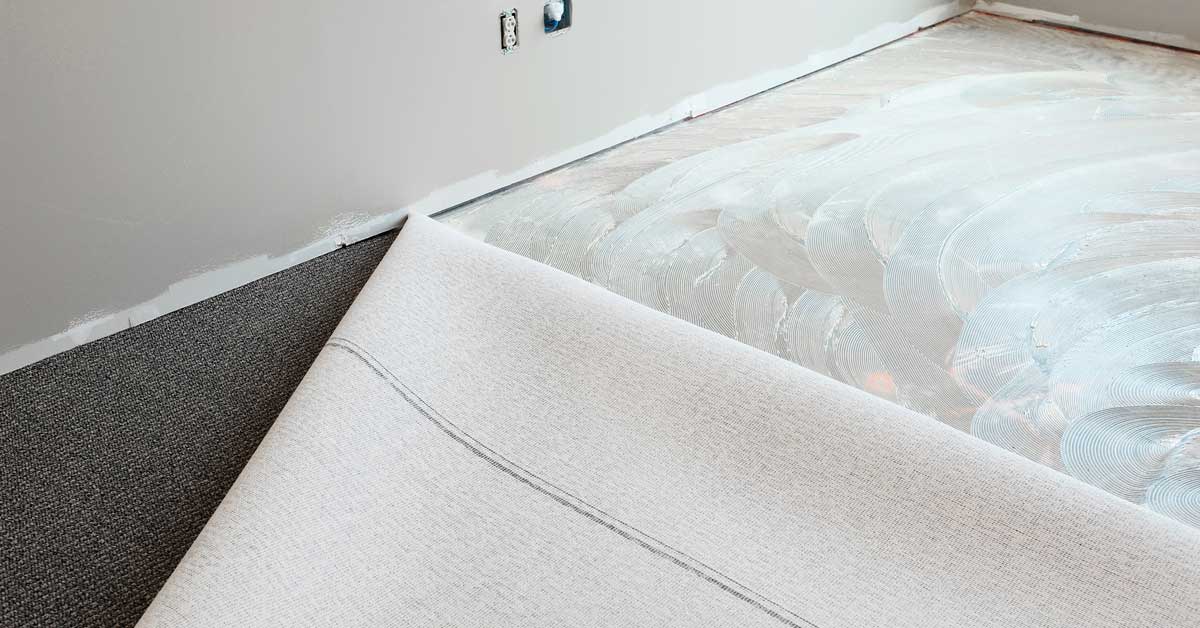
New construction carpet flooring installed.
If you talk about materials that go out of style and getting used less in home remodeling projects than carpet is definitely one of them. Very much used in condominium bedrooms and cheaper quality homes.
What carpet is good for is definitely ability to change it easily. It does not cost much as materials and installation is not complicated. You can cover larger areas of floor in not time with little knowledge.
Stairs can be covered with carpet as well. Home owners with small kids like carpet versus other types of flooring materials, because it is softer for landing when kids fall down.
Why carpets are getting turned away by most of home owners is they get very dirty and dusty quick. These things create health problems and allergies.
Regular carpet should cost around $2 – $3 per square foot in local chain stores and suppliers.
5. Tiled Floors
It’s very rare to have a house or condo without any tiles on the floor. We see it everywhere. Tiles are in bathrooms, entrances, laundries, hallways, kitchens, basements and sometimes throughout entire houses.
There are tons of styles, shapes and sizes of tiles and it is easy to find something you will like. Tiles are very durable and easy to clean. If you have pets at home, tiled floors would be the least of your worry.
Basement and bathroom floors with tiles are often get heated with electrical or radiant water pipe heated floor systems
It is not practical to use tiles as material of floor finishes in main living areas in cold weathers without heated floors. Tiles get cold quickly and walking on them during the winter is not pleasant at all.
There is no average material cost for tiles as range is quite high. They go from like a dollar per square foot to several hundred dollars per square foot.
6. Stone Flooring
Natural stone is very similar to tiles in installation functionality. It’s installed in most of areas where regular tiles are installed and on top of that natural stone is used for outside.
Stone is durable and usually larger in thickness than ceramic. It transfers heat but does not react to it. Because it is not mass produced by humans, but rather found in nature and refinished, it will have different shape and lines all the time.
Warmer climates are perfect for stone tiles inside and outside of your home. The downside of this flooring is it may be rough and even sharp on your feet. The other downside of stone it is extremely heavy and delivering it to remote places.
Average costs for natural stone and same category types of flooring materials for your floors are around $7 per square foot.
7. Concrete Types of Flooring Materials
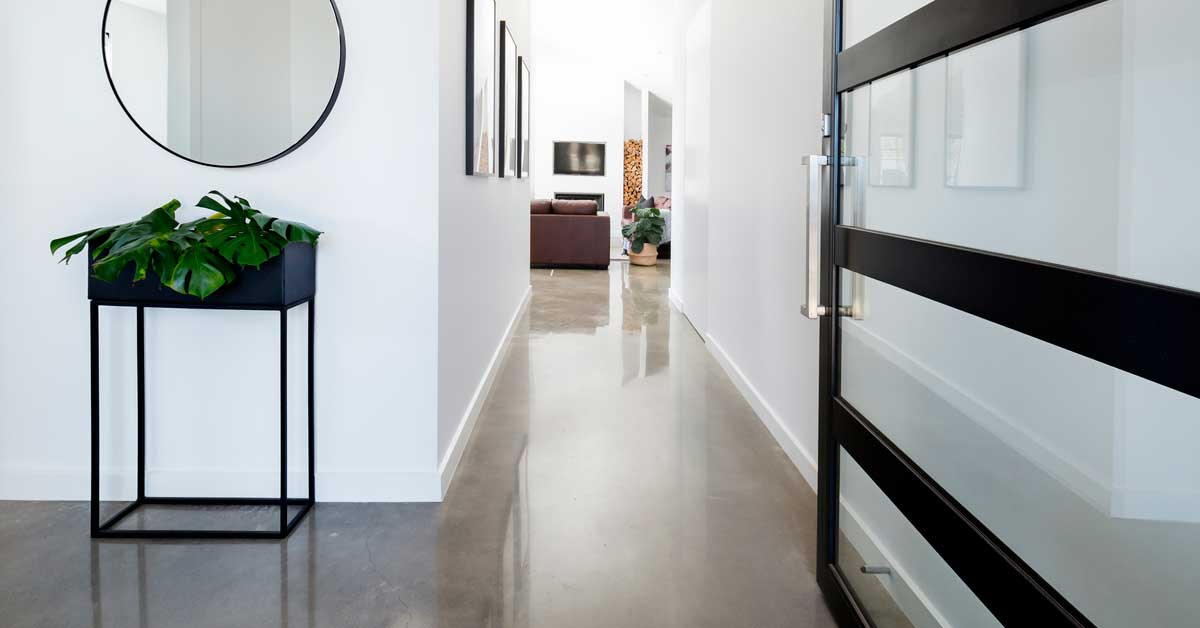
Modern concrete stained and polished as floor surface.
The floor that everyone used to cover with other materials but now becomes popular on its own is concrete. Largely used before in commercial properties and now in many residential homes.
Concrete is greater transmission of heat and even with thought out heating system for home, even in cold weather cities concrete heated floor can be seen in modern homes as finished material.
It is easy to maintain and colorful finishes can be used. Lifespan of concrete is insane comparing to other materials and lasts for many decades.
Problems with concrete are it is very hard and cold. Without proper heating you will not like it with barefoot. In multiple stories home concrete becomes loud if there is no other noise resistance system.
To pour new concrete with material and installation it costs on average $7 per square foot. Keep in mind other listed materials are averaged without installation costs.
8. Vinyl Tiles or Plans
Next to carpet, easy to install material for homes is vinyl. It can be used for many purposes with tons of style options. Vinyl products can imitate laminate wood flooring as well as tiles. It is very good for surfaces that get wet or damaged all the time.
Normally we see vinyl as different types of flooring in high traffic areas such as local businesses, stores, home that are built on budget. It is cheap and easy change weather it is tile shaped or planks similar to hardwood. It is 100% resistant to moisture and will not change shape if exposed to water.
With all these great features the issues with vinyl come as well. Even though its used in traffic areas, vinyl gets scratched and damaged easily. It is also very hard to remove due to artificial material being glued to subfloor.
Vinyl is relatively cheap flooring option and it goes for $2 per square foot
9. Cork Mats
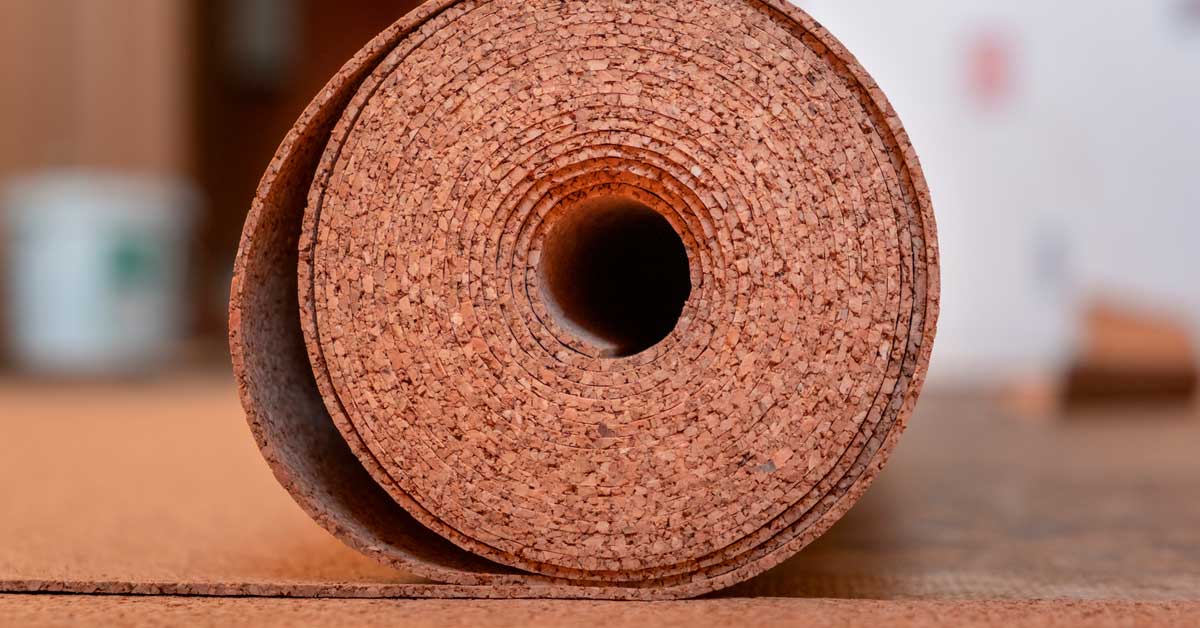
Soft and noise resistant cork flooring material.
Not often you see these floors in new homes, but there are home owners that install cork floor in few parts of home. It absorbs water and other moistures, therefore not popular in kitchens, entrance areas and obviously bathrooms.
Cork floors are soft to walk on block noise very well. It has very similar good and bad qualities of carpet flooring, but rarely installed because it costs more. You wouldn’t ever guess but cork floors can be refinished.
Changing color will disappoint home owners that install cork or similar types of flooring materials. It is also hard to clean and reinstalled once damaged.
The cost of cork flooring in America is $4 per square foot.
10. Rubber Floor
We have never seen rubber floors installed throughout the house, but some areas or rooms may definitely have that. Commercial areas rubber floors often used for gyms, yoga studios and entrances to stores.
Rubber floors are very soft and often resistant to liquids. The greatest benefit of rubber floor materials are being non slippery. To protect themselves from lawsuits for accidents, businesses often install rubber floors.
At home rubber floors are used as well in basement areas and in home gyms. Rubber floors are not attractive and it has very intensive smell.
The cost of rubber floor installation is $10 per square foot.
Conclusion for Different Types of Flooring Materials with Costs
You should select what is suitable for your residence and absolutely works for you in terms of looks and functionality.
Working with different budgets will be a big factor as well but we recommend functionality over money because if you plan to live in your current home for many years.
Subscribe to our newsletter and follow or new posts for more information on flooring and overall remodeling process.
latest video

news via inbox
Nulla turp dis cursus. Integer liberos euismod pretium faucibua