
10 ways nature can affect construciton project

10 Ways How Nature Can Affect Construction Project

Last Updated: 2021-08-12By

Construction is extremely hard process to put plate and finish exactly what you wanted how you wanted. If you have found the perfect building that will complete your remodeling or new construction in time and within budget, there are still few things to consider.

Besides process that you can control, we will be discussing situations that we can only prepare for to the best of our abilities. Nature cannot be controlled by humans and it can either help you with construction or make it all a nightmare.

Here are few things that On Point Remodeling team wants to want home owners about:

  • Trees and roots
  • Bushes
  • Elevations
  • Animals
  • Underground waters
  • Floods
  • Earth shakes
  • Soft soil
  • Cold weather
  • Hot weather

While there is no way to control weather and nature, it can be easier to predict certain obstacles with experience. Our writers with local builders can help you construct without running out of money due to incidents that involve nature.

1. Trees and Roots Expanding Towards Construction

No matter where you go, there will be trees or some sort of roots on your property. Maybe not exactly where your home remodeling or construction is, but nearby trees can still cause problems.

One of the problems is trees can be on the way where you want to build something. While in some areas and cities you can just get rid of the tree, other regions will require permit for removal.

Other problem with trees is their roots that can go under your driveway, into foundation and even drain pipes. To deal with the problem prior to planning we recommend inspecting the area and analyzing nearby trees with potential size of their roots.

Different materials can be used to protect from roots penetrating surfaces. There are ways to live in contrast with nature and saving wildlife around you.

2. Bushes That are on the Way

Small or large bushes can be on your way as well as trees. They do not create much of damage, but rather inconvenience. If some bushes are on the property before you start remodeling or addition you can easily cut them down and remove from lot.

In long process of construction that drags for months and sometimes years, bushes may grow during the process and trades that are on site do not want to deal with it. You just have to all the service or remove them by yourself. It should not cost a lot. With few hundred dollars bushes can be cut and processed.

Very inconvenient situation when large bush is split in the middle by property line from your neighbor. What do you do in this situation? Your neighbor has been enjoying nicely cut leaves or flowers for many years and you want to get rid of it, but don’t want to compromise relationship with neighbor.

3. Elevations from Flat to Steep
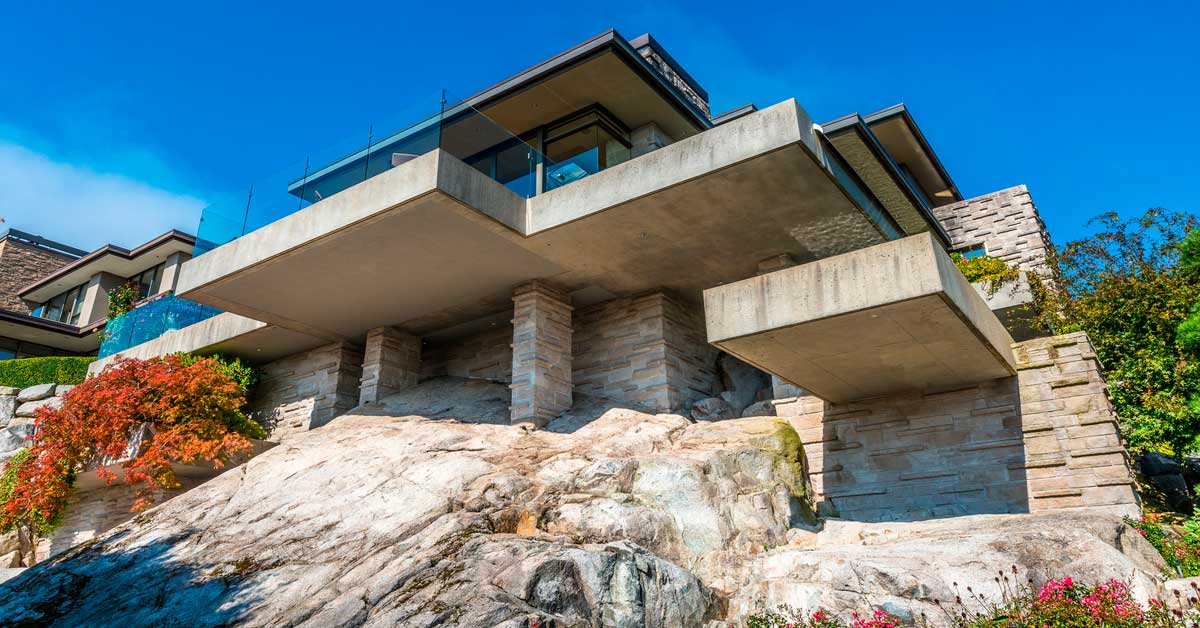
Dangerous elevation to build on

House built on rocks with complicated elevation.

It’s obvious that perfect house lot for construction is flat with stable soil, but what happens when that is not the case.

To hold the house you need the load to be spread out on points that are stable in the ground with appropriate footings. In other words your construction will have concrete foundation or footings that hold either walls or posts that support the home.

Many cities in Europe and Asia are built on sloped hills or mountains with rocky and stone ground base. It’s not ideal, but there are ways to get it done in all types of elevations.

4. Animals Coming Inside

No matter where in the world you start your home construction, there will be some sort of wild life around.

There will be animals that would love to move in with you into new home, and we assume that your family or workers that are in mid process of building are not going to be happy about that.

In cold and moist areas you can get birds nesting, racoons and squirrels looking for shelter. Hotter areas can attract animals for shade and cooling down from hot sand. You can get snakes, scorpions, birds and other local animals.

In situations with animals and birds ending up on your construction project, we recommend calling animal control for proper removal. It should not cost more than several hundred dollars.

5. Underground Waters

One of the most devastating situations in construction process is to find out you have underground water after excavation. You definitely do not want your base of home sitting on pile of water. It will penetrate and come inside through concrete, blocks, bricks and any other material.

We strongly suggest doing geotechnical soil testing before you confirm all details of construction project. This will show the stability and type of soil as well as any underground water present.

These soil tests can cost several thousand dollars for average home lot. There are ways to divert underground streams or to drill support piles deep down to support construction, but it may cost tens of thousand dollars.

6. Floods from Rains and Overflows
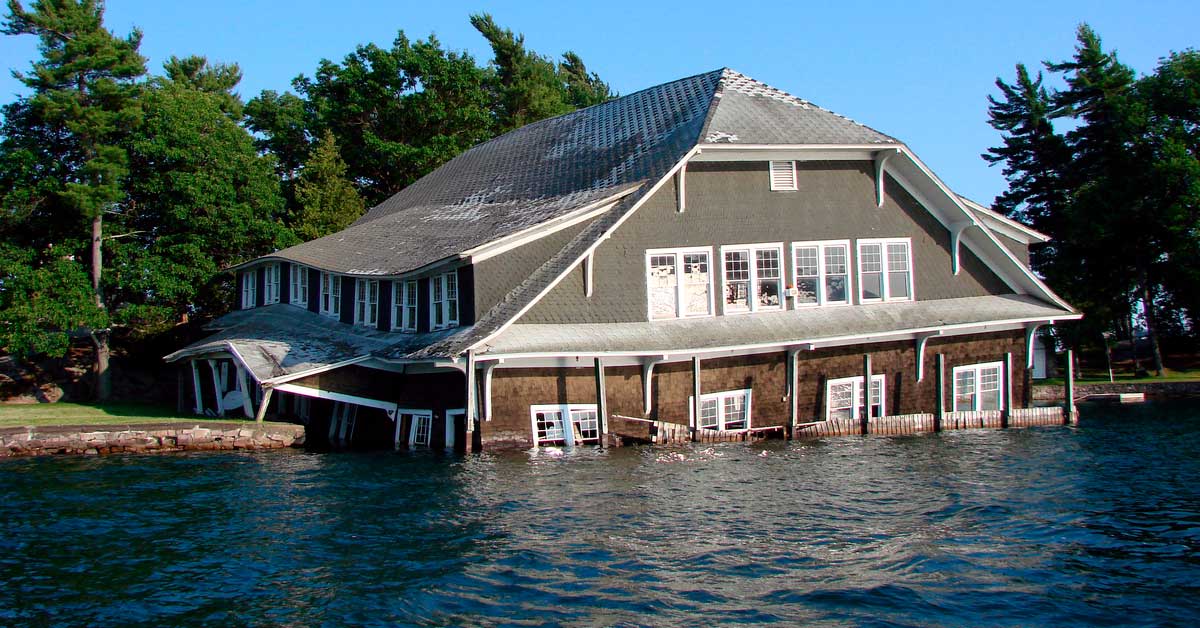
Floods from overflow of lake

Large house destroyed by overflown lake.

Natural disasters scare us the most as they are unpredictable and very dangerous. One of them that cause remodeling or construction problems is a flood. It can happen almost anywhere in the world if you are on flat surface. Obviously home that are built on top of hills can only get heavily rained on.

The water can come from overflowing rivers and lakes, city water or drain lines, from mountains or elevated hills, and hurricanes with tons of rain.

The only way to prevent floods is to choose most raised level of your property for construction and avoid building under a hill or very close to water line. We feel for those who are unfortunate with devastating losses due to natural disasters.

7. Earthquakes

This is one of the rarest construction disruptions that builders and home owners experience. Earthquakes are relatively small in America, but they do happen from time to time in some areas.

Small earthquakes will not destroy your house, but rather cause damage to improperly secured materials and some parts of the building. For example vanity or kitchen may detach from the wall and fall down.

Modern construction methods with reinforced concrete and proper metal used to bounce of the load has been progressing through the years to prevent houses from falling down.

In areas that are known for earthquakes we recommend always putting extra support in load bearing walls, fastening all furniture and fixtures with tight screws and ties.

8. Soft Soil at the Bottom of Construction

Just like underground waters, the soft soil can be found during the excavation for the foundation of your new construction. Imagine how sandy ground is going to withstand the entire load of your construction home without moving or sinking through the ground.

There are ways to work any type of soil, as you can imagine massive cities like Dubai are built on deserts with only sand. In softer soil you can drill holes very deep and pour concrete right down to hold the base of house like on big legs.

On Point Remodeling recommends performing soil test before excavation to avoid surprises and unexpected expenses.

9. Cold Weather Temperatures

In states and regions with cold weather we have to be careful with timing and speed of construction. Most of the materials we use are sensitive to temperature and moisture.

If your city has winter with snow and cold temperatures for at least few months per year, we recommend starting and finishing the outer box of the house before temperature drops.
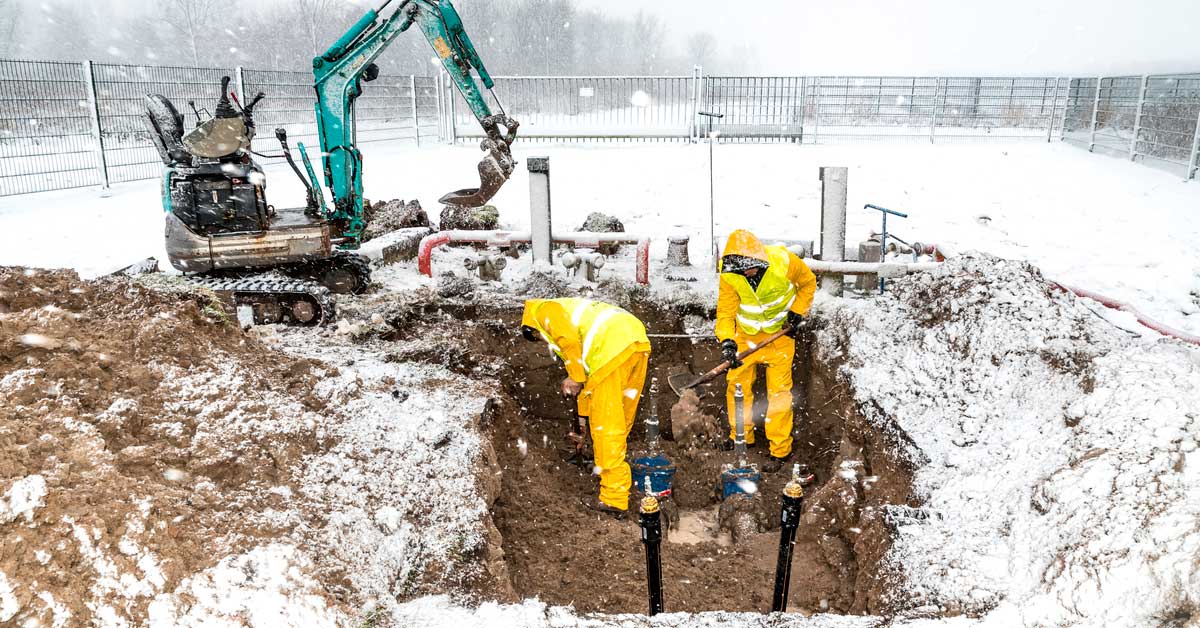
Extreme cold temperatures for cosntruciton project

Workers trying to complete project in extreme cold.

With core of home being done and enclosed with proper heating system, you can easily continue going at it through the winter, but be careful with temperature control and deliveries.

We do not recommend framing or doing concrete work during the winter because it may ruin the materials and compromise the house structure.

10. Hot Weather and Humidity

Building home or any other construction in hot weather conditions is not a walk in a park. While most materials cannot be damaged, some definitely can. Be very careful with wood and MDF products.

Everything that is made out of wood or manufactured wood looking materials can react to warm weather and humidity. This goes for floors, cabinets, doors, baseboards and even furniture.

While materials can be damaged with expansion, the most significant cost related affect is actual work. It is very difficult and even dangerous to work when it gets hot. We recommend following local health and safety recommendations for all constructions. If you are involved in work outside, make sure to take breaks and always stay hydrated.

Conclusion

Nature is our friend but can cause serious damage and delays in construction process. We feel obligated to warn all our readers with potential issues that can be caused by nature and temperature.

There are certain things and costly situations you can avoid with tests and professional experience, but some situations cannot be controlled and only carefully dealt with.

For suggestions on who to use as a builder in your area contact On Point Remodeling team and we will be glad to help with the best candidate for the job.

editor's pick

latest video

news via inbox

Nulla turp dis cursus. Integer liberos  euismod pretium faucibua

Each building has some sort of driveway or at least should have. The main reason is for vehicles to come closer without need to walk all the way. Some homes are residential with small driveway for their car to come in and park before garage or front entrance, and others can be large commercial buildings with loading docks, delivery entrances and casual parking entrances. On Point Remodeling was asked for suggestions on residential driveway for new home construction, and we decided to write detailed article for all our readers. Using this guide you can select the material for your driveway and see what works for your budget. Here are the materials for driveway we will be discussing in our guide:
  • Asphalt
  • Concrete
  • Paver Stone
  • Crushed stone
  • Brick
  • Seashell
  • Gravel
To find good contractor for your driveway, you can either ask our team by email or try to find someone local that worked with neighbors or nearby buildings.

Installation process of any material surface on your driveway

a) Demolition and Excavation – Before anything is done, your contractor will get heavy machinery and scratch off old layer of driveway. They need to go down at least 5-6 inches to insure proper layering before your final layer of material is installed. b) Material Purchase and Delivery – At this point your contract is signed and you already know how the surface will look. Contracting company purchases necessary materials and delivers them to site. Double check if material is correct and not damaged. c) Preparation of Sublevel – Whatever you place as final material, it cannot just be installed directly on top soil. Gravel is the first choice of material that goes down at this stage. Other preferred material is screen sand that can go on top of gravel and works better with stone and bricks. d) Compaction of Ground – To prevent your driveway from moving and changing shapes, all the layers from bottom up have to be properly compacted. Do not leave any spot untouched while doing this or you can get small holes and cracks in driveway after installation. E) Final Installation – This is when all the magic happens. After all preparations and dirty work the final installation is made literally within hours and you can enjoy new driveway. Stone and brick is set up by hand, while other materials require some sort of machinery with manual labor to even out surface.

1. Asphalt

Probably the most used material for road top surfaces as well as driveways is asphalt. This is a mix of gravel and sand that is mixed in and combined by asphalt cement with crude oil. Pros of Asphalt Driveway
  • Very popular and easy to find materials/contractor
  • Completed in 1 day and you can drive on it after
  • Patches and small holes can be fixed fast
Cons of Asphalt Driveway
  • Easy to damage and cracks appear in few years
  • Almost everyone else has same surface
  • Oily surface and chemicals used in mix
Prepared for asphalt driveway will cost you around $5 per square foot to finish. The contractors that take care of entire process from taking out old driveway surface, install subsurface and compact the ground with new asphalt on top, will charge on average $5500 per regular size driveway at single home property.

2. Concrete

What we call concrete is a mixture of Portland cement, aggregate as well as sand with gravel. Suggested thickness of concrete for driveway is 6 inches. The mixture needs to cure without being touched or driven on top for several days. Pros of Concrete Driveway
  • Durable material for large weights
  • Long lifespan if installed properly
  • Winter and summer friendly
Cons of Concrete Driveway
  • Has marks and stains over time
  • Hard to repair without replacement
  • Super hard to DIY
To hire contractors for concrete driveway it will cost around $7-$9 per square foot. This will include site preparation with gravel spread and new concrete installation. They will order full truck of concrete (or several for larger driveways) to pour inside forming. Smoothening and curing is required after installation.

3. Paver Stone

The most luxurious material that you can use to create driveway path with is paver stone. It is made out of natural stone with uneven rough shapes that have different line patterns. Paver stones are very heavy and are perfect for weights on top of them. Almost every city in Europe has roads and walks made out of stone that were installed centuries ago. Pros of Paver Stone Driveway
  • Creative designs can be done
  • Personal looks, can match the house
  • Can replace single stone in minutes
Cons of Paver Stone Driveway
  • Weeds growing through
  • Stone can move over time
  • Most expensive material
There is wide selection of stone that can be purchased for your driveway. On average we recommend settling with $17-$20 per square foot for stone with installation included. Working with this material is very intense labor and we recommend hiring professionals that do this type of work every day.

4. Crushed Stone

Our readers sometimes mistake crushed stone with gravel, but this is not the same material. Crushed stone material is achieved when machine is mechanically crushing larger pieces of unused stone for this specific purpose. It is larger than gravel and can have smooth finish. Crushed stone can also have a mix of colors, which is much pleasant to eyes than gravel. Pros of Crushed Stone Driveway
  • Low maintenance required
  • Fits rural area style
  • Can be reused for other purposes
Cons of Crushed Stone Driveway
  • Gets very hot during summer
  • Can be messy after many drives
  • Hard to remove snow and ice
Buying crushed stone and installing it on your driveway is as easy as it gets. Similar to other rough materials discussed in this post, only small tools like shovels, dolly and buckets are required to spread it on the road. The cost of crushed stone driveway is between $4 and $6 per square foot from professional local contractors that can finish the job in several days.

5. Brick

The same brick we see being used in wall construction can be installed as top driveway surface. Brick is manufactured by compressing clay with plastic mass. It is heated to extreme temperature and dried up to become as solid as you know it. Pros of Brick Driveway
  • Variety of selections in shapes and shades
  • Bricks are recyclable
  • Slip resistant with rough top part
Cons of Brick Driveway
  • Needs regular maintenance
  • Change color over time
  • Old fashion looking
Installing brick on driveway costs $10 per square foot, which is not too far from masonry brick laying as part of the wall. To save money you can use or purchase old brick, that was part of a wall before. Do not mix these two jobs and contact landscaping professionals instead of masonry contractors that work with bricks.

6. Seashell

This material is popular on the coast line where shells can be found near the water. Construction companies use seashells to add in other materials as well as spread them on driveway in rough condition, without adding anything else. It usually comes in white or pearl color and darkens within year because of mixing with sand and dirt. Pros of Seashell Driveway
  • Environmentally friendly
  • Has natural drainage
  • Creates worm vibe of beach house
Cons of Seashell Driveway
  • Break and crack under light weight
  • Sharp and very hard to walk on
  • Gets stuck in shoes and tires
To deliver and spread seashells on driveways costs below $4, which is only slightly more expensive than rough gravel. As you go further from coast line, cost of material increases due to delivery. This material is elegant and very soft. We recommend adding edge lines with darker color landscape material to create visual path.

7. Gravel

This material is used in other construction mixes and underlayment systems. It’s literally fragments and small crushed stones that are put on top of soil. It is easily spread out by hands and anyone can do it. Pros of Gravel Driveway
  • Cheapest of them all
  • Easy DIY Job
  • Can install another material on top
Cons of Gravel Driveway
  • Needs to be graded very often
  • Will mix with dirt and leaves
  • Washes up with heavy rains
It is rough material and can be purchased in bulk (by metric tons or cubic meters). The cost of driveway with gravel should not exceed $3 per square foot, but you can save tons of money by purchasing materials and doings installation by yourself. You do not require specific tools or heavy equipment for the job and delivery of gravel can be arranged directly to your project.

Conclusion

To properly finish any and all of these driveways requires skills and experience. There is no way you can complete any of these projects without heavy equipment and tools that regular home owner’s just store in their garages. Most of those who will read this post will prefer to install asphalt driveway, because of its popularity and low costs. We want to encourage home owners to go for personal preference and what matches your house, rather than getting the most affordable and popular items. Driveway jobs have to be completed fast; otherwise you will need to park elsewhere while the project is running. To not overpay, ask us for quotation sample on material you prefer in specific region where the work need to be done and our team can provide some numbers.

Leave A Comment