
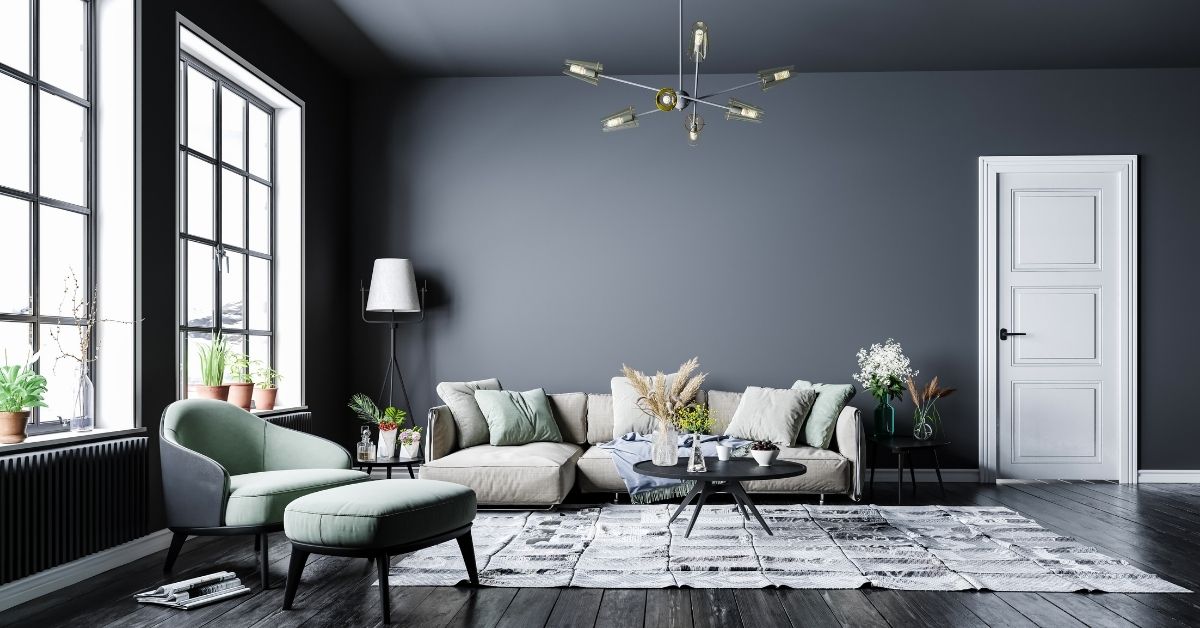
Pros and Cons of Painting Ceiling same Color as Walls
When planning a room’s design, an important question is whether the ceiling and walls will be the same color. Such painting is significantly different from painting walls and ceilings in different colors, and it also has many advantages. For example, painting in one color is faster and allows you to create an unobtrusive interior.
In addition to reducing costs, painting the ceiling the same color as walls will make it easier for you to combine colors. The ability to visually expand the room and create a calm atmosphere is also considered an advantage. The downsides are the difficulty in choosing the decor and incompatibility with moldings and coffered ceilings.
As you can see there are many pros and cons of painting ceiling same color as walls. Experienced designers make great use of them to emphasize all possible advantages in the interior.
[instagram-feed]Pros
If you are in doubt whether you should use one paint color for the whole room, then you should understand the advantages of this method. By understanding the positive aspects of this method of painting, you can determine in which rooms of your house it is applicable.
As an example, we would like to take a closer look at each positive side of painting ceilings and walls in one color.
- Painting is Faster
- Reducing the Cost of Painting
- Increasing the Depth of the Room
- Don’t worry about Color Incompatibility.
- Creates a Quieter Room Environment
- Suitable for many Styles
- Much Easier to Fix Defects
Painting is Faster
When thinking about a renovation of condo or a house, one of the most important questions that arise is how long it will last. As for painting the walls and ceiling in the same color, then this work is much faster to complete than when different colors are used for these surfaces.
Firstly, the speed of painting is affected by the fact that you do not need to carry out additional preparatory work. For example, you don’t need to cover the walls with plastic before painting the ceiling. Also, you do not have to spend a lot of time creating a perfectly smooth transition between the ceiling and walls.
Reducing the Cost of Painting
The good news for you is the fact that painting the walls and floor the same color will save costs. The decrease in cost is because since you buy paint of only one color, there will be less unused paint.
Also, you do not need to use materials to separate the painting of walls and ceilings, because the color is the same. If the work is done by hired workers, then the faster they paint the less you pay.
Since we have already found out that painting walls and ceilings in one color is much faster and bypasses some of the processes, this means that the cost of work will be less.
Increasing the Depth of the Room
When you use paint of different colors for the ceiling and walls, then you draw a clear outline of the planes. When using paint of the same color for walls and ceilings, you can visually increase its size. This feature will be very useful in rooms with limited space.
Using paint of the same color visually hides the corners and makes the room appear larger. For example, in this way you can make the interior of a small bathroom or bedroom much cozier.
We also want to draw your attention to the fact that not every color is capable of giving such an effect. Dark shades of burgundy and brown, on the contrary, can cause visual pressure on the walls and a person will feel uncomfortable in such a room. Therefore, when using different color shades, it can be and pros and cons of painting ceiling same color as walls.
Don’t worry about Color Incompatibility
If you have ever turned to an interior designer for help or watched video tutorials on how a room should look, then you have clearly heard a lot about how incongruous some colors are with each other. This is a very difficult creative process, and you can easily avoid it if you choose to paint the ceiling in the color of the walls.
You don’t have to worry about the result of something funny, and in the saddest case, you will have to repaint the room. Use neutral tones for walls and ceilings to create a backdrop in your room.
Creates a Quieter Room Environment
If you paint the walls and ceiling in different colors, then they will undoubtedly draw attention to themselves. If you choose the option with one color, then the room will look calmer and will not be conspicuous.
This interior is perfect when you want to create a peaceful atmosphere in the room. If you want to add color, then you can always do it with the help of accent furniture or decor.
Suitable for many Styles
We have already mentioned the fact that the walls and ceiling painted in the same color are much less emphasizing on themselves. This is very convenient when you have not decided on the style of the interior in the room. By painting in neutral white or gray tones, you can easily bring most styles to your room.
Also, this feature will be very convenient for those who do not like constancy and are constantly transforming their home. The ability to change will allow you to bring something new to the interior without worrying that the decor or furniture will not be combined with the style of the walls.
Nowadays, a minimalistic style is very popular, in which there is a minimum of details. However, every 10 – 15 years the popularity of styles changes. When you paint the ceiling in the color of the walls, you don’t have to worry about this situation. Neutral tones are always in vogue and you get a timeless interior.
Much Easier to Fix Defects
Each wallcovering may need a little repair over time. Paint on walls and ceilings can be scratched or chipped. This happens especially often if children or pets live in the house.
In this case, it is much easier to carry out light repairs if you used to paint of the same color for walls and ceilings. To do this, it will be enough for you to have only one can of paint in stock.
Cons
No matter how many positive aspects the walls and ceiling are painted in one color, there are still have disadvantages. Fortunately, there are far fewer of them, and with the right approach, you can avoid most of them.
- Eliminates the Possibility of using Moldings and Coffered Ceilings
- The Room can seem Lifeless
- Harder to Choose a Matching Decor
- The need for Multiple Lighting
Eliminates the Possibility of using Moldings and Coffered Ceilings
Since when you paint the walls and ceiling in the same color, they become less accentuated, it is not recommended to use decorative elements of the walls and ceiling. Such elements include moldings and coffered ceilings.
Considering the pros and cons of painting ceiling same color as walls, this feature can hardly be called a minus. You just need to understand that if you plan to paint a room in this way, then you will have to abandon such interior details.
The Room can seem Lifeless
If you use solid color paint for walls and ceilings, it can seem that the room looks soulless and empty. Painted in bluish and white colors can feel like a hospital, which is not fun.
Nevertheless, it should be understood that furniture and decor play an accent role in the interior of such a room. With the help of these elements, you can breathe life into the room and then the monochromatic paint will give freshness.
Harder to Choose a Matching Decor
Based on what is described above, you can understand how important it is to choose the right decor when painting the walls and ceiling in the same color. Against the background of light, non-accent walls, many incongruous elements will be very noticeable.
If you are not well versed in interior design, you can seek help from specialists. A professional designer will create the interior of your room so that each element is in its place and emphasizes the features of the room.
You can also find many examples of interior images on the Internet. You can use this method to avoid these disadvantages of painting without spending money on the services of specialists.
The need for Multiple Lighting
The last of the downsides to painting walls and ceilings in one color is the need for a lot of lighting. This can be especially felt when using paint in darker and more saturated tones, for example, burgundy.
To keep the room from looking gloomy, make sure it has large windows and lots of lights. If the amount of natural light is limited, then you can try lighter paint colors or even white.
Pros and Cons of Painting Ceiling same Color as Walls in Different Rooms
Based on all the pros and cons of painting ceiling same color as walls described, it can be assumed that this painting method is not suitable for all rooms. Excellent use of painting in one color can serve as a bedroom, office, and bathroom.
The bedroom is the room in which we relax after a hard day at work. Accordingly, the interior of this room must be calm and peaceful. Therefore, painting the walls and ceiling in one color is perfect for this room.
The same can be applied to the office room in the house. In this room, it is also important that the interior and colors are neutral. This allows for fewer distractions and allows you to fully immerse yourself in your work.
As for the bathroom, painting the walls and ceiling in bluish tones or white will add freshness and cleanliness. The positive side is that this method of painting will help to visually expand the room, which can be very important for most bathrooms.
The least common painting of walls and ceilings is one color in living rooms and kitchens. These rooms are designed for guests and therefore many designers strive to make them stand out. For this, coffered ceilings and moldings are often used, which are not compatible with painting the walls and ceiling in the same color.
Nevertheless, the minimalistic style is gaining more and more popularity. This concept is perfectly compatible with painting walls and ceilings in one color. Because of this, this method of painting is becoming more common and even applicable in living rooms and kitchens.
editor's pick
latest video
news via inbox
Nulla turp dis cursus. Integer liberos euismod pretium faucibua