
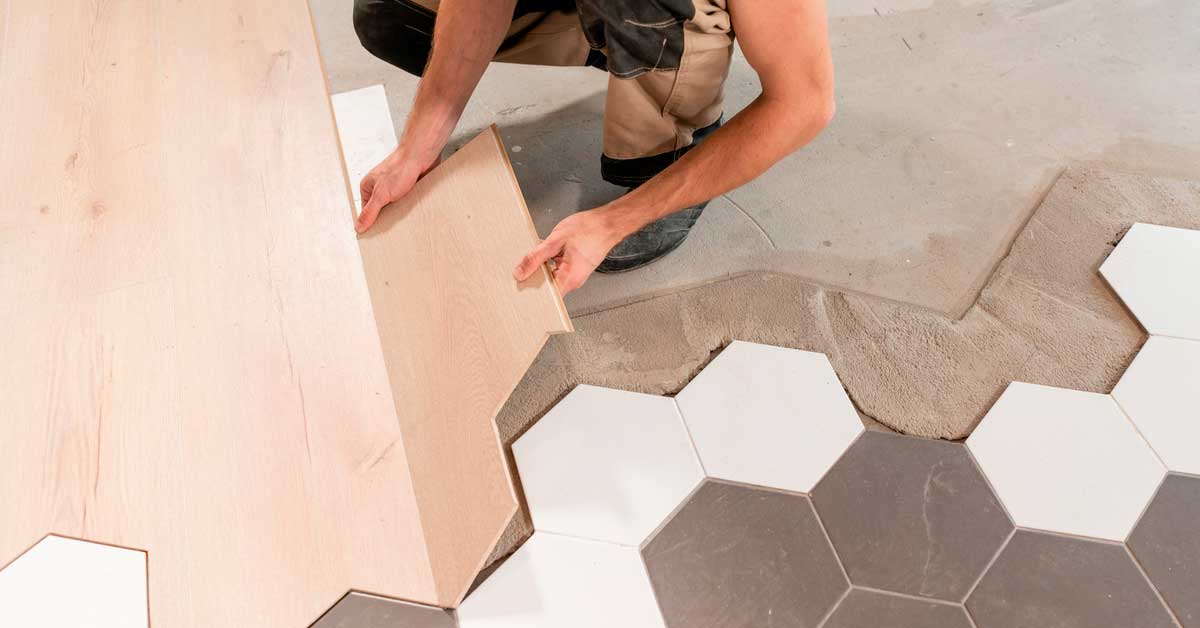
8 Hardwood Floor Patterns You Can Select For Installation
Almost every home has hardwood flooring in specific parts or throughout. This material is very popular for installation and has many different options of colors, styles and even patters.
Today we wanted to discuss seven patterns for hardwood flooring and explain deference in cost, installation process, arising problems and how much waste of materials you should calculate when purchasing.
On Point Remodeling team wants to educate our readers and have them on the right track for the flooring pattern they think is suitable for them. Keep in mind that not all the materials can be used for some specific styles of flooring and contractors installing the floor should be specialized in this specific work.
- Straight Pattern Flooring
- Diagonal Pattern Flooring
- Random Pattern Flooring
- Herringbone Pattern Flooring
- Chevron Pattern Flooring
- Parquet Pattern Flooring
- Decorative Borders Pattern Flooring
- Basket Weave Pattern Flooring
In some cities it will be harder to find contractor that can do these hardwood floor patterns of floor for you. Ask our team for recommendations in this work and we can email you great company for the work as well as supply material.
[instagram-feed]1. Straight Pattern Flooring
The most common of them all is flooring installed with straight pattern. Flooring boards go one next to another one without creating any specific layout.
How to install – There few ways to install hardwood flooring. It starts with clicking it together and aligning each row one after another. The sides of hardwood planks have clicking connection details which help to reduce the gap between and stay together for longer time. The actual installation is done by nailing and gluing floor to the subfloor.
Where used – We can see these floor patterns used everywhere. Literally in 80% of all flooring there is in the world we see straight pattern because of simplicity and installation being cheaper than other styles. It can be used in hardwood planks, rubber flooring mats and even tiles.
Costs for installation – Hardwood and engineered hardwood installation costs start from $1 per square foot and can go up to $5 per square foot. In average house of 2000 square foot floor space, open concept and planks up to 5 inches, you should be paying $1.5 per square foot. Wider planks need both nailing in and gluing to the subfloor for stability and cost $3 per square foot for installation. Less square footage for the job and more corners increase the cost.
Waste required – Professionals installing the floor normally require 5% – 8% of waste for the materials to be accounted for. With wider planks and more corners in the house or office the waste will increase to up to 10% of all materials that should cover floor space.
Problems – The biggest downside to this selected pattern is that it lacks uniqueness. For those who want to stand out and have different flooring, straight pattern is not something to go with.
Benefits – This pattern is the easiest and cheapest to install. If your plan is to save money or to try install it by yourself than On Point Remodeling recommends straight pattern flooring for your home.
2. Diagonal Pattern Flooring
Just reversing the straight pattern gives you diagonal layout. The idea is to create slightly different look by reversing plank and installing it with shift of 45 degree angle. It all lines up at the end of the day and in perfectly square room you should have one straight line of flooring connecting opposite corners.
How to install – The same principle applies to diagonal flooring as straight pattern. You can glue it down, nail it or combine the methods if hardwood planks are wide enough. Start with middle of the room and come up with good plan how the floor is going to be put through the room as well as exiting the room.
Where used – Some of the residential home owners like the diagonal pattern and install them throughout the house or condo. Mostly where we see diagonal floor is in large commercial spaces and parts of residential homes where home owners want to underling design of hallway or specific room.
Costs for installation – On average we see diagonal floor being just slightly more expensive than straight pattern. You are looking at 10%-15% more do the same square footage and same complexity. Just as the pattern discussed above, the costs increase with complexity level, number of corners to cut into and planks being wider.
Waste required – Because of diagonal cuts at each end of the line, where flooring meets the wall, the waste is going to be higher than regular. Our suggestion is to purchase 10% – 12% more of flooring materials for the waste needed.
Problems – In large square rooms diagonal flooring installation looks very appealing, but installation throughout house may create confusing affect. Diagonal lines do not look as good in tiny hallways, landings and powder rooms.
Benefits – almost any hardwood floor installer can do it with diagonal hardwood floor pattern. This style is not complicated and still relatively cheap. Diagonal style is coming back and becomes more requested by home owners.
3. Random Hardwood Floor Pattern
This style is very unique and has not been used previously as much as these days. It has literally no pattern or even color of the floor. It can be placed in any direction, with different size planks and even different hardwood material.
How to install – Random pattern need tons of expertise to install. You need a firm plan of what materials you will be using and what not to do. In some cases there is complete randomness, but some stick to same color or same size material but random floor pattern. Installation is mostly with glue and sometimes direct nailing. Edges for click installation may be sawed off because of no pattern.
Where used – Unfortunately this style is not for everyone. Very rarely we see it in offices and even residential homes. Random pattern is either to bring tons of attention or completely distract people. It can be used in some type of stores or showrooms, presentation centers and even restaurants.
Costs for installation – Contractors can charge anywhere from $2.5 to $6 per square foot for random pattern flooring. The fact that most of this work is done for commercial properties almost automatically increases the price. Experience is highly required in this specific installation.
Waste required – It may come as a surprise to our readers, but there is almost no waste with random pattern flooring. Because you can flip the plank and install it randomly in next line or corner, this style makes it less wasteful out of 8 patterns for hardwood flooring we have in this article. Nevertheless you still need up to 5% of extra material for deficiency and cuts next to walls.
Problems – Most of the people do not like this pattern style. Although it is very unique, to majority it does not look appealing. Another con for this type of floor is timing it takes to install. Even professionals can take twice the time they would do straight pattern.
Benefits – You can potentially use leftover materials or flooring that is on discount. Do not forget that it has to be the same thickness or you will have edges all over the floor. This way you can save money on materials.
4. Herringbone Engineered Hardwood Floor Pattern
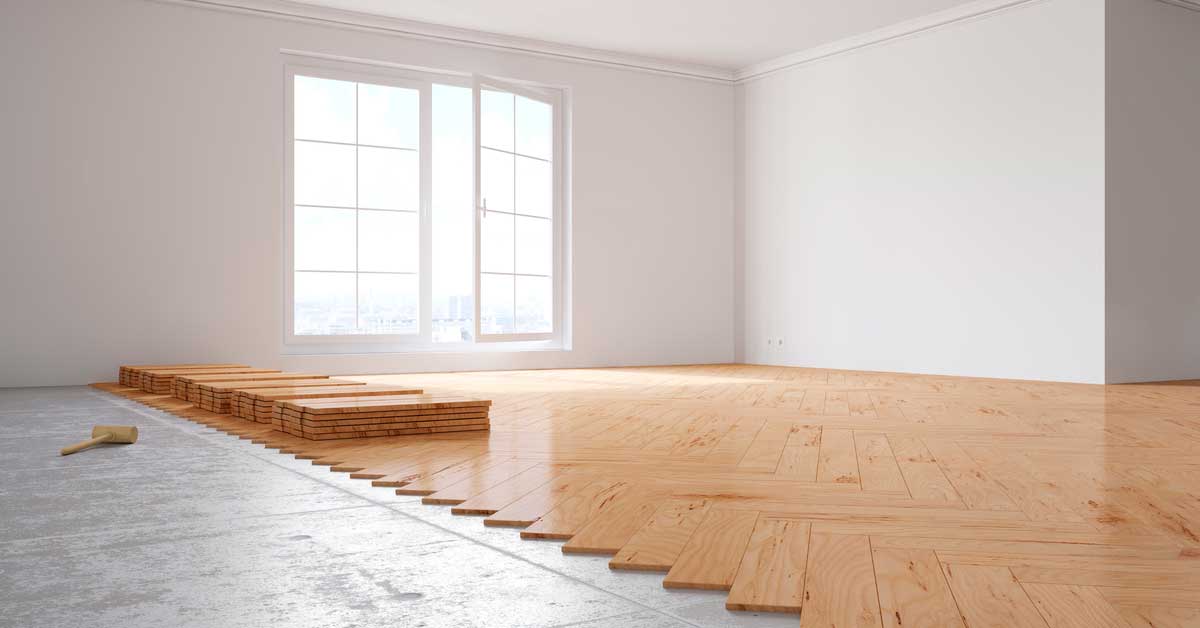
Very expensive and time consuming herringbone pattern.
Herringbone is one of the patterns that start to dominate the market of tiles and hardwood flooring. It’s assembled from rectangular planks of hardwood in 90 degrees connection which creates the look of herring.
How to install – There are two popular ways of installing herringbone. Most preferred is angular herringbone that points towards the wall, similar to chevron pattern. Herringbone starts parallel to the wall and points with pattern angle to the corner of the room. Straight herringbone can be described as mix of horizontal and vertical planks in 90 degree connection.
Where used – Within upscale or simply put higher than average homes we can see herringbone pattern flooring installed. In remodeling process of entire home on in new custom home constructions where home owners spend hundreds of thousands dollars, it makes sense to spend a little more extra for creating luxury flooring.
Costs for installation – When hiring flooring contractors to install herringbone hardwood floor pattern in residential place, you will be paying $3 – $5 per square foot. On commercial projects this number slightly increases and can be between $4 and $6 per square foot. Materials for this work are between $6 per square foot and $12, without any subfloor or underlayment.
Waste required – Because of unique pattern and many corners going against the walls with cuts almost on every plank, On Point Remodeling suggests 10% – 12% of extra material for waste and deficiencies. Material that is prebuild and connected in large sheets can have less waste – 6% to 8%.
Problems – Complains that arise with herringbone pattern flooring are either about high costs or about how the finished product looks. You cannot really do anything about high costs of installation and materials for herringbone, but looks can be better if you hire experienced professional and make sure that subfloor is perfectly leveled before installation.
Benefits – This style is unique and becoming very popular in luxury homes. When considering designer floors, herringbone is actually on the cheaper side and has great structure to add wow factor to any home or office.
5. Chevron Pattern Flooring
Chevron style is always confused with herringbone by nonprofessionals, but there is clear difference. This hardwood pattern has distinct wavy pattern line that continues the entire stretch of the room where it is installed. Unlike herringbone, it needs to be cut on each side with perfection to connect one to another.
How to install – Just like other hardwood material it is either glued or nailed to the floor. Some flooring suppliers have precut planks specifically for installing with chevron pattern of floors and some even went further with large boards of precut and already put together floors. Custom cutting and laying out takes tons of expertise and time to do. We suggest using a sample piece to measure and make exactly the same size cuts. Also before installation it is recommended simply to lay everything on the floor and see how it looks. If everything is aligned you can start installing the floor.
Where used – After some research, On Point Remodeling team found that chevron is used in high end homes and private offices. Not only houses, but also penthouse condo apartments tend to install one of the most expensive floors.
Costs for installation – There is no low cost start for chevron pattern flooring. Only installation cost is $5 on average, and material on market is somewhere close to $10 per square foot. If contractor is quoting you less than $3 per square foot, there is something work and you should ask for many references of his work.
Waste required – Chevron planks are precut, but you still need to trim them on each side of the wall. Our math tells us that requirement for purchasing extra materials due to waste is close to 8% – 10% of entire flooring space.
Problems – Material for this floor pattern is extremely expensive. Installation takes long time and even a smallest mistake can be seen by unprofessional eye. Suppliers and installation contractors are very hard to find for this type.
Benefits – Chevron is the ultimate luxury of the floors. You can easily show off in front of all your friends with this type of floors. It has very distinctive lines and looks kind of European.
6. Parquet Hardwood Floor Pattern
When we mention parquet pattern floor, automatically this image of old apartment floor pops up in our heads, but in reality there are tons of creative layouts for this hardwood floor pattern and some are very expensive and can complement and high end residence.
How to install – Nowadays you do not assemble parquet pattern flooring with small pieces. The pattern is already premade and installers have to only measure the room for better positioning at edges and walls to avoid unnecessary cuts. Also putting down the entire floor before installation will help better understand exact layout and catching on possible mistakes.
Where used – Back in the days this floor was very popular everywhere. Now we can see it in older apartments, because they are not renovated as often as private houses. Although we think of old parquet floor, there are new very modern shapes of parquet manufactured with top quality wood. Those are used in expensive homes and vestibules of commercial places like museums and hotels.
Costs for installation – The cost to install parquet floor is very broad. The most basic 12 x 12 inch boards can cost $2 per square foot to install and have material price as low as $3 per square foot. High end materials are above $10 per square foot and installation for them will cost you around $5 per square.
Waste required – Parquet style will not have too much waste and you should not throw away too much money for cuts because of premade square boards. We recommend going for 5% to 7% of waste on this material. Installers could have bigger problems with tiny rooms and narrow hallways where more cuts need to be made.
Problems – Majority of the parquet flooring is square if your room shaped abnormally the floor will not look as good. For example rooms with round side or curved hallways can be designed better with other type of flooring pattern.
Benefits – Because of previous popularity in apartments, flooring manufacturers started prebuilding parquet hardwood floor pattern floors for easy installation. This factor increases the speed of installation and decreases overall costs.
7. Decorative Borders Pattern Flooring
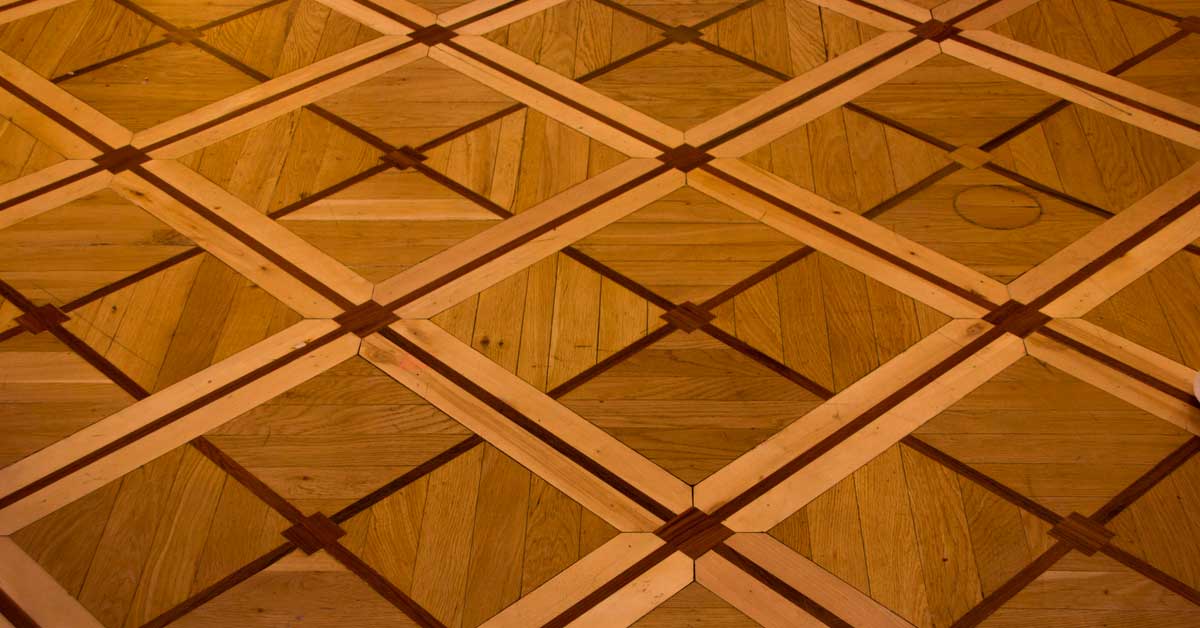
One of a kind decorative hardwood floor.
The one pattern that really stands out from them all and is seen very rarely is decorative borders flooring. It is exactly what you hear in the name of this style. The idea is to create visual borders with different color material on your floor.
How to install – The plan is absolutely necessary for installing decorative borders pattern, and starting drawing it on paper is the right thing to do. Normally after figuring out borders for the room installers put the entire main style floor in the middle (without cuts, using full boards) and surround it with border line. All the cuts are next to the wall if necessary and never in the middle or next to border line. Material used has to have same thickness.
Where used – Top luxury houses with top of the line interior designs can have border lines floors in main living areas and hallways. Many commercial properties and businesses like this floor for the lines to guide visitors or keep them away from something. Good example of this would be museums with limited distance to items and lines that visitors cannot cross.
Costs for installation – Probably the most expensive flooring installing in our topic is decorative borders. Labor costs start from $6 per square foot and can go as high as $15. Materials for this way of installation does not have to be expensive, but we suggest not to cheap out and select reputable manufacturer.
Waste required – With proper calculation and good contractors that know what they are doing, you should not have too much waste. We reached out to few companies that actually install these floor and they suggested average 8% extra materials for waste.
Problems – Cost it one of the main problems with this type of floor. It is very hard to find professionals that do border line flooring and if you succeed expect to pay top dollar for their work. The other issue is finding two floors that will match perfectly and at the same time create necessary lines.
Benefits – On Point Remodeling team put two positive points of border line floor patterns. After a survey with our subscribers and in-house voting we selected this pattern as most preferred luxury floor. Second benefit this floor has is natural border lines that are sometimes necessary for the premises to guide occupants.
8. Basket Weave Pattern Flooring
Very similar to parquet style but it is not the same. Some people mistake one for another and even call basket weave as a type of many parquet patterns. In this design we clearly see planks overlapping each other and there is no perfect premade material that can easily fill up the room.
How to install – To start installers will prepare subfloor to make it close to ideal level. This pattern requires perfection. Basket weave is purchased in small boards with connectors on one or more sides. It’s like assembling Lego, but with cuts along the walls and corners.
Where used – This is considered one of designers’ layouts and because of high costs for installation and labor for this product we can easily say it is seen in places that like to show off. Just like other wood floor its spotted in northern houses that have better climate for hardwood.
Costs for installation – Basket weave floors made of hardwood are very similar to parquet pattern boards in installation, but cost higher for labor due to complexity level and assembly of parts. You can get this pattern installed for around $4 per square foot. Materials will range from $4 to $12 per foot.
Waste required – It mostly all depends on your residence square footage and overall corners. Just like parquet boards if the room size is just slightly bigger than full boards fit, installer makes tons of waste. Example: hallway is 4 feet and 3 inches wide – this means you need to use 5 boards, and the last board is only used to cover 3 inches. In this hallway waste is close to 17%. For full house we suggest 10% extra material for waste.
Problems – Basket weave pattern is not ideal for most of residences. With era of modern homes we rarely see this style being used on the floors. You need perfect environment, deep wallet and desire for this style.
Benefits – Wood materials used for this type of pattern is very durable. It’s what you call high end hardwood that does not require much maintenance and does not expand to have gaps between each plank.
Conclusion
Before installing new floor at your home or office you should start with ideas for budget. This will give good idea of what you can afford. If your wallet is flexible our guide will help you decide with the hardwood floor patterns that can create unique design for your place.
Ask floor installation company for images of previous work with your selected pattern. Just because they know how to do straight floor does not mean they can do good job doing other patterns. To go more in-depth into understanding designs and patterns, brows our website for articles about exact style you like or considering for installation.
latest video

news via inbox
Nulla turp dis cursus. Integer liberos euismod pretium faucibua