

11 Popular Kitchen Finishes Materials for Cabinets
The kitchen is one of the most visited places in our house. We cook food here and just spend a lot of time. Therefore, it is very important that it looks beautiful and is very convenient to use.
Since most of the kitchen is occupied by various cabinets, their style and appearance play an important role. There are many varieties of kitchen finishes materials.
- Kitchen Cabinets Covered with Glass
- Stainless Steel Kitchen Cabinets
- MDF One of the popular Finishing Materials
- Plywood as Kitchen Finishes Material
- Red Oak Most Choose Finishing Material in the USA
- White Oak for Luxury Style
- Classic Cherry Kitchen
- Surface with Hickory Wood
- Maple Wood Material
- Laminate Modern Type of Kitchen Finishes Materials
- Veneer as an Alternative for Wood
It’s easy to get confused with such an abundance of interior finishing materials. And sometimes people do not understand their features. Let’s take a closer look at all types of materials presented, their pros and cons.
[instagram-feed]1.Kitchen Cabinets Covered with Glass
Glass is a very common type of coating for kitchen cabinets and this is due to many factors. Firstly, the glass surface looks quite stylish and fits many popular interior styles. Secondly, cleanliness is an important factor. Glass is very easy to clean, which plays an important role in the kitchen. You may spill something or grease all surfaces while cooking. It would be very disappointing if these stains remained forever or it would take a lot of time to clean them.
Don’t worry about the glass being fragile. The thickness of the glass is small, moreover, it is glued to the plywood of the cabinet itself, which increases its strength. And even if a situation occurs in which the glass is damaged, it can be easily replaced with a new one.
Paint or pattern is applied to the back of the glass to give your kitchen the desired color. In this situation, the glass itself also serves as a protection against wear. Your kitchen’s color won’t fade over time, even if you clean the surfaces frequently.
But in addition to the pleasant features, glass kitchen finishing materials are not cheap compared to other types of materials. The cost of such kitchen finishes material is estimated at $ 19 – $ 23 per sq. ft.
2.Stainless Steel Kitchen Cabinets
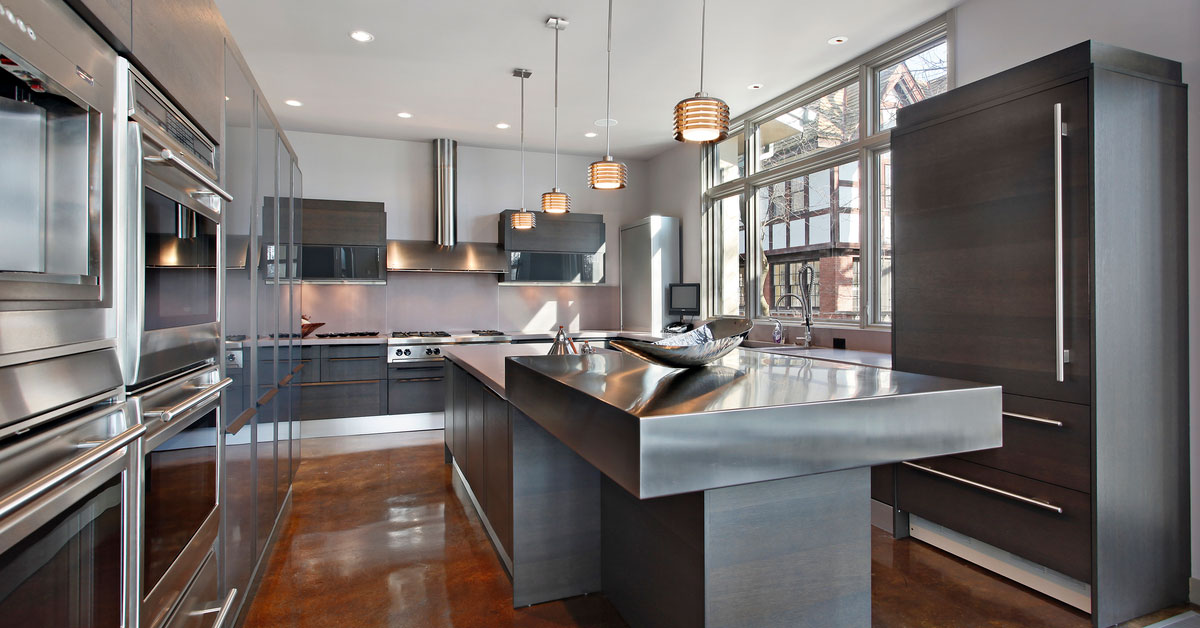
Using stainless steel as the main material for kitchen.
When it comes to steel, we immediately understand that it is a durable material. This statement also applies to the use of steel as kitchen cabinet materials finish. This type of coating gained its popularity when the industrial style came into fashion. Also, it is well suited for those who like to cook a lot because of its ease of use and cleaning.
Since steel is a very durable material, you shouldn’t worry about breaking anything. Sometimes it is even better to look around and not hit the open metal cabinet door.
Unlike other coatings, this type of cabinet is completely made of steel and the cost of such cabinets starts at $ 300 per cabinet.
3.MDF One of the popular Finishing Materials
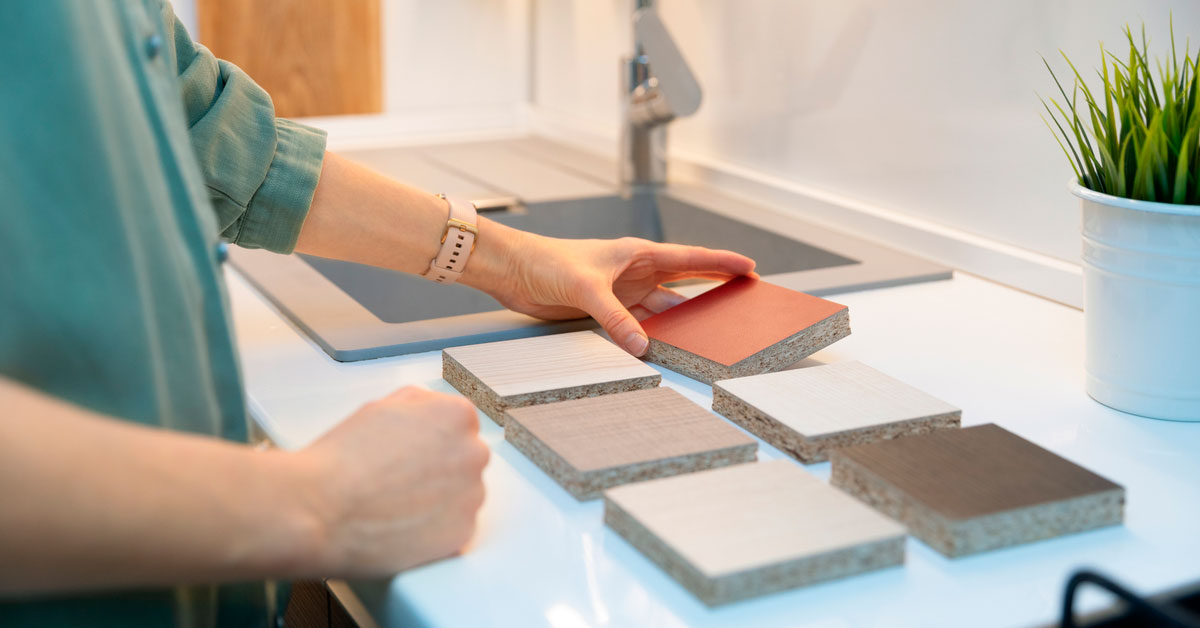
Women choosing MDF color by samples.
MDF is a fairly common material. It consists of fine wood fibers compressed under high pressure using wood resin. This material is quite practical for many types of furniture, as well as kitchen finishes material.
Finishing materials made of MDF are very smooth and pleasant to the touch. All this is because MDF boards are varnished or painted before use. Because of this, they have a huge spectrum of colors. If the varnish is used, then there will be woody shades, otherwise, paint of any color you wish.
MDF boards are much stronger than wood and come in all sizes, so there is no problem with their use in the kitchen. The cost of this type of material ranges on average from $ 16 – $ 20 per sq. ft.
4.Plywood as Kitchen Finishes Material
Plywood is another material made from wood. Unlike MDF, plywood is a glued wood chip. This material is often used in construction, but if varnished or painted it will look beautiful in the form of kitchen finishes materials.
Physically, plywood is very similar to MDF, but it is still considered a less environmentally friendly material. Also, due to the simpler production method, plywood is much cheaper.
5.Red Oak Most Choose Finishing Material in the USA
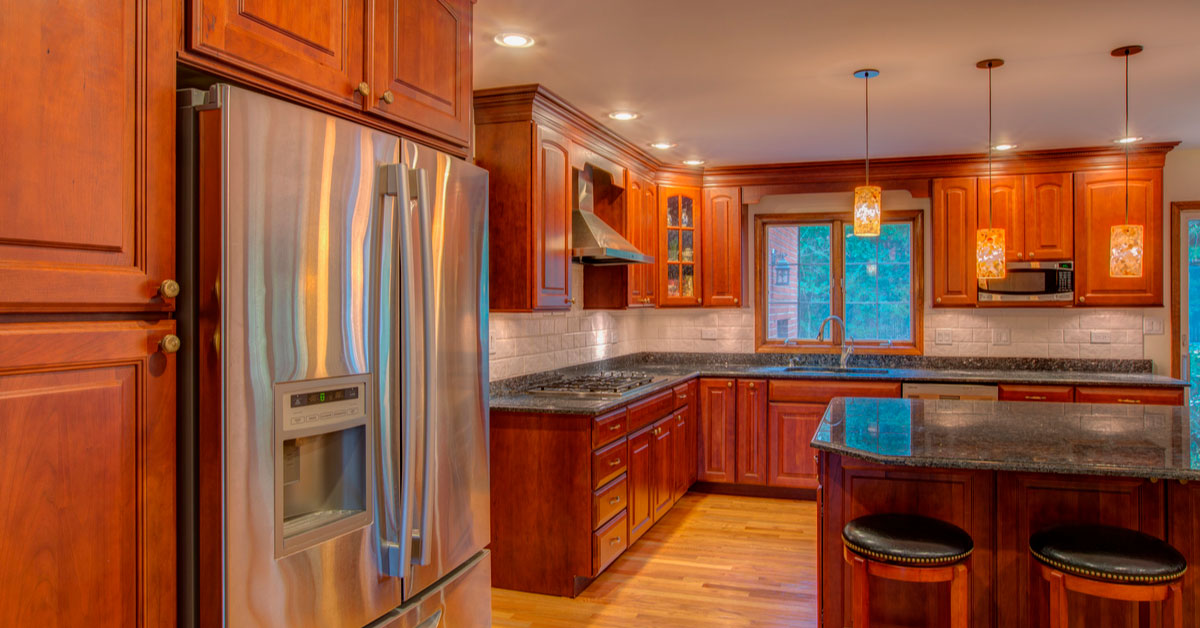
Kitchen furniture covered with red Oak
Red oak is a very common material in the United States. This type of wood has the necessary qualities that are so appreciated in the manufacture of furniture. Red oak gained its prevalence due to its strength and relative cheapness in comparison with other types of wood.
In addition to the benefits listed above, red oak has a beautiful color. This is very important when you are choosing kitchen finishes materials. Nice reddish woody shades will come in handy in a classic or rustic interior style.
Red oak finishing materials are coated with a special varnish to preserve their appearance for a longer period. With wet cleaning, the tree will not swell and lose its shape.
6.White Oak for Luxury Style
If you are following the trends of popular interiors or simply prefer light colors in your home, then you should pay attention to white oak finishing materials. Unlike red oak, white oak is less common as it is more expensive.
Although the physical properties of these two types of wood are very similar, they are completely different in appearance. White oak looks more elegant and sophisticated. It goes well with light-colored tiles, which in most cases are used for the work area in the kitchen.
It is also worth understanding that white oak is not only more expensive but also looks the same. If you are looking to add luxury style to your kitchen, then using white oak as kitchen finishes materials is a great solution.
7.Classic Cherry Kitchen
Cherry kitchen cabinets have been popular for hundreds of years. This is because the material is American black cherry wood. Although the cost of such wood is much higher, this kitchen cabinet material will serve you much longer than oak.
Nevertheless, cherry wood gained its popularity not only because of its strength but also because of its beauty. There are many shades, ranging from bright red to deep burgundy. Also, a distinctive feature is that the tree changes its color slightly over time.
There is a possibility of painting cherry wood finishing materials in different colors. However, if you want to keep the natural color, Remodel on point recommends using wood coated with oil varnishes.
8. Surface with Hickory Wood
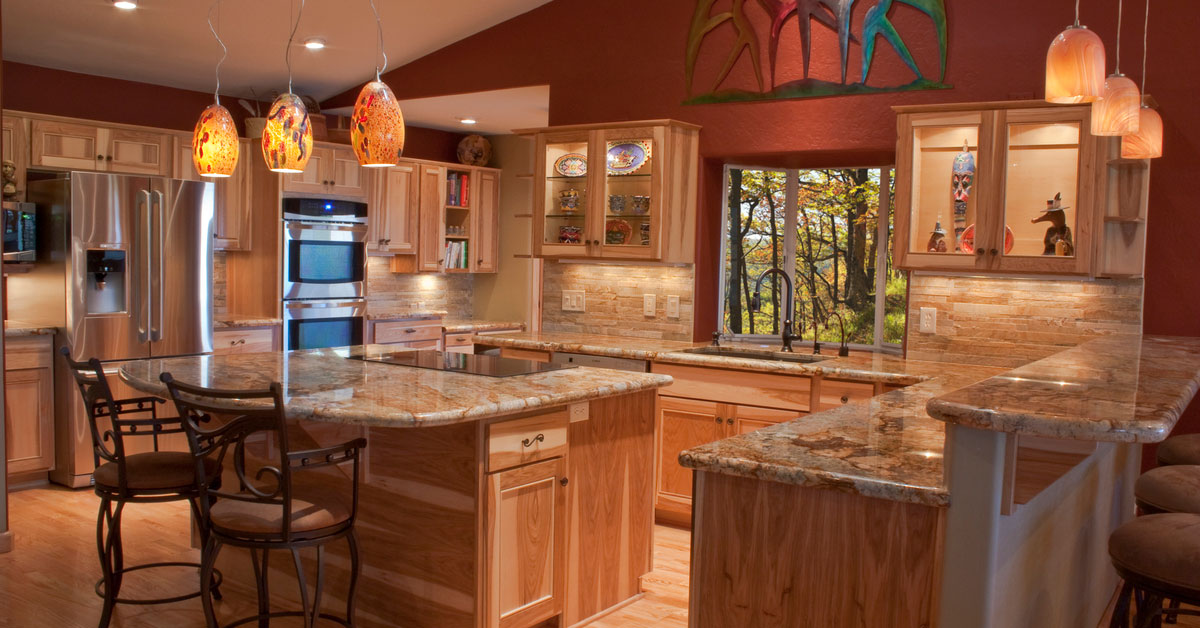
First of all, what is hickory? It is a tree from the walnut family that grows in the United States. It has a dense structure and is very heavy. This is great for using it as kitchen finishes materials.
Hickory has a variety of textures. Both light and dark colors can occur on the same board, and this pattern does not repeat. This feature will allow even two identical kitchens to stand out. Each cabinet door will have a unique color. This feature is great for a classic rustic kitchen.
9.Maple Wood Material
Maple is considered one of the most practical types of wood. Due to its variety of species and flowers, maple can be used as a kitchen cabinet finishing material in almost any interior style.
It is a very strong and durable wood. In addition to this, maple lends itself well to many types of processing, which allows you to give it any color and appearance.
Maple is very common throughout America because it costs less than rare species of wood. When using this wood in kitchen finishes, it is recommended to choose the color of maple depending on the amount of natural light. With plenty of sunlight, dark tones can fade over time from exposure to ultraviolet radiation.
10.Laminate Modern Type of Kitchen Finishes Materials
Using laminate as finishing materials for kitchen cabinets has long been considered a cheap refurbishment option. This was undoubtedly deserved, due to the poor quality and fragility.
Technology has improved over time and this has affected laminate as well. Made according to modern technologies, it has distinctive features that surpass even classic wood.
Laminate can be of absolutely any color and color as it is created artificially. It is not susceptible to UV rays and does not lose its color even after many years. Also, the laminate does not allow moisture and other pollutants to pass through, which makes it easy to keep the kitchen clean in excellent condition.
When creating a minimalist kitchen, laminate flooring is a great solution for cabinet finishes.
11.Veneer as an Alternative for Wood
Not everyone can afford to make kitchen finishes from expensive types of wood. An excellent solution, in this case, would be a veneer. This finishing material is very similar to wood. It consists of an artificial core and a glued layer of wood fibers.
Due to the inherent composition of the artificial material, the veneer is more resistant to deformation than natural wood finishing materials. Veneer has a pleasant sheen that blends well with other kitchen surfaces.
The low price and quite acceptable quality make the veneer a rather popular kitchen finishes material in renovations on a budget.
Conclusion for Kitchen Finishes Materials
There is a huge variety of kitchen cabinet finishing materials. You can use materials available due to the development of modern technologies and popular for many centuries.
Remodel on point advises choosing material based on several factors. These include primarily the price. If you have an impressive budget, look for modern glass finishes, or use classic rare woods.
Much also depends on the style of the room. An experienced interior designer will be able to advise you on the types of coatings to use in your kitchen. Or you can get creative and combine everything to create a unique style in your home.
Remember that all kitchen finishes materials have their characteristics and require some care. Take proper care of the selected materials and they will serve you for decades.
editor's pick
latest video
news via inbox
Nulla turp dis cursus. Integer liberos euismod pretium faucibua