
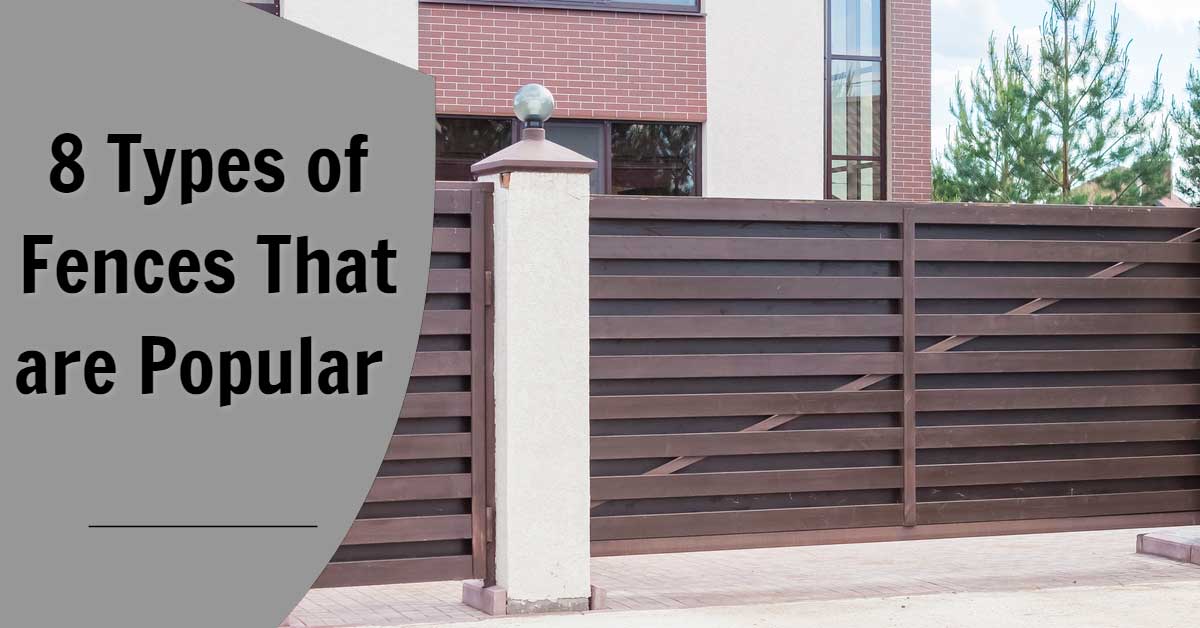
8 Types of Fences with Styles That are Popular Today
On Point Remodeling has decided to gather information on 8 types of fences you can install inside or outside of your home with comparison in prices, installation and other components.
We had requests from our subscribed visitors to discuss options of fences for backyard separations and how much the costs area. After some research we came up with 8 most popular types of fences installed on backyard, in front of the house and inside.
Here are the types of fences we will be discussing and comparing:
- Wood Fence
- Metal Fence
- Glass Panel Fence
- Concrete Fence
- Aluminum Fence
- PVC Fence
- Vinyl Fence
- Trees and bushes
If you are looking for material supplier or contractor to install your new fence, our team can help you find reliable and cost effective solution in your area. Contact On Point Remodeling by email for more information or write to use through social media messaging.
1. Wood Fence
There are many types of wood you can use for fencing inside and outside of your home. It can be bamboo, hickory, maple or anything else that sells in your region but two most popular options are pressure treated wood and cedar.
Pros:
- The most common type of material for fencing is wood because it is easy to work with. It does not require very tons of skills and the best material for DIY Project.
- Pressure treated wood is one of the most affordable materials to use for your fence. It will not break your pockets like different types of fences could.
Cons:
- Wood has the smallest lifespan out of all materials. Expect your fence to be in good condition for 15 years. After that the weather will help it come closer to its serving time expectancy. Covering fence with exterior paint or stain will expend the time of use.
- Maintenance is needed when you make your fence with wood. Constant chip offs and fading in time can be maintained with new painting or staining.
Cost: Pressure treated wood fence costs between $35 and $55 per linear foot. Cedar planks fence costs exactly the same for installation but materials will run 30% more.
2. Metal/Iron Fence
We see more and more popular exterior property fence made with iron. Luxury homes tend to customize their metal surrounding and top spikes. It is definitely not for everyone, but we definitely recommend exploring the option of metal fence if your budget allows.
Pros:
- When you select metal as material for your new fence you think lifetime. If properly maintained with rustproof you can have it there literally for almost a century.
- The iron work can get very custom and unique. Yes we understand that any material can have different layouts and patterns but with metal you can make something extraordinary that no one else has.
Cons:
- This types of fences is very delicate and custom work, therefore the biggest downside of it is the cost. It is one of the most expensive selections that are on our list of materials.
- Time of production and installation is very time consuming for metal fence. For average around the house metal fence you are looking at least 4-5 weeks manufacturing and several weeks to install.
Cost: up to $40 per foot for chain link metal types of fence. Purchased metal fence is $60-$70 per linear foot with installation. Custom iron fence starts from $120-$160 per linear foot.
3. Glass Panel Types of Fences
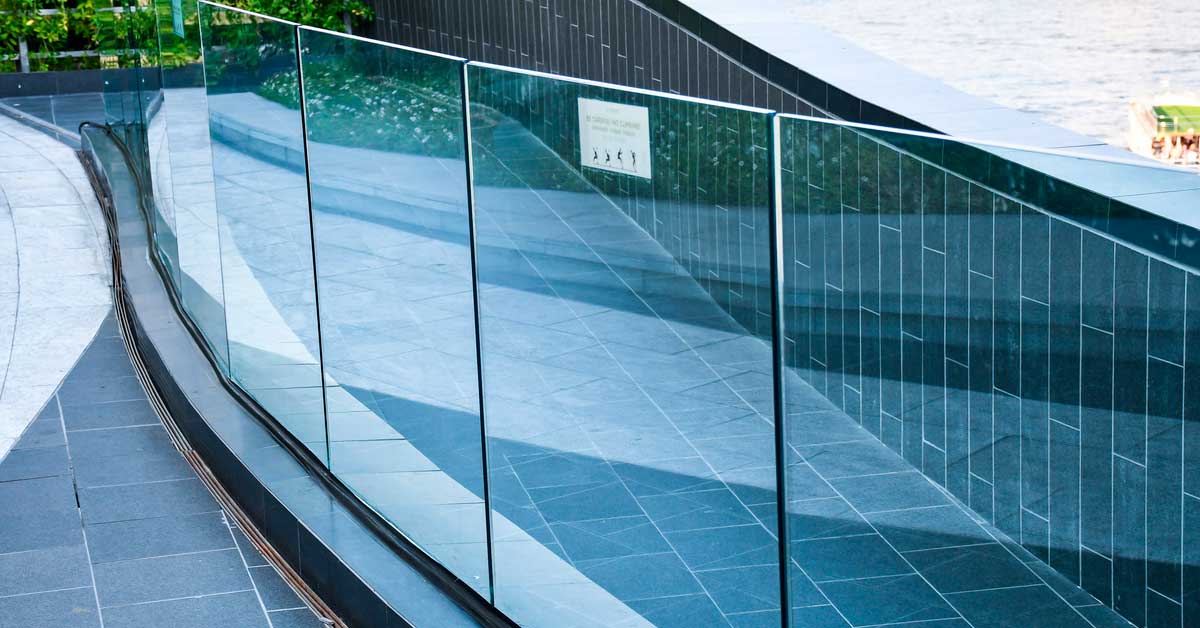
Sleek looking modern glass fence.
Another popular material for fences in expensive homes is glass. There are fences that you can purchase and install by yourself with little effort, but in most situations it requires custom manufacturing and installation by professional contractor.
Pros:
- Glass fence is very modern and stylish. It creates open concept look and makes the property look bigger than it actually is. If you want to modernize and remodel you place, than glass separation or fence will be on your list of upgrades.
- Another benefit of glass material being used in new fence is that it doesn’t block pretty views. There are homes with tremendous views that you just want to keep by all means. It includes homes by water, on top of hill and other properties with astonishing view.
Cons:
- Even toughest glass is fragile. There is tempered glass that is much stronger, but it is still far away in strength comparing to metal or concrete fence. We suggest using it as separation within your property or inside home.
- Cleaning issues with glass has always been there. The main purpose of glass fence is to be see-through and with little dirt or dust it ruins entire look. Glass fence requires constant cleaning to make it look perfect all the time.
Cost: Glass being very expensive in manufacturing for fence and installation has the cost of $200 per linear foot. It also depends on size of it and specific features added (tempered, blasted, frosted)
4. Concrete Fence
In southern regions On Point Remodeling team sees more home owners lean towards their fences being constructed from concrete. Mostly because everything else is made of concrete and it withstands temperatures similar to actual house next to the fence.
Pros:
- Unlike other fences, concrete structure creates complete privacy with possible safety features on top. There is no person that will be able to see through concrete fence and none should try to go over it.
- Benefit of concrete fence on your property is durability. You can literally hit it with a car and it will be somewhere intact. Concrete is very strong and you will have this fence standing for a very long time if it’s don’t properly.
Cons:
- Making fence out of concrete is not cheap by any means. There are many stages in this process and they all cost tons of money. You need some sort of footing or foundation, concrete forming and pouring, finishing with details and painting
- Building and demolition complications definitely may have you rethink selecting this material. It is like a big construction process when building fence with concrete. If in future you will change your mind, taking it down will require tons of work and money.
Cost: with all work that is required to build concrete fence the total costs can be as high as $150 per linear foot. This is based on fences and barriers that are at least 6-8 feet tall.
5. Aluminum Fence
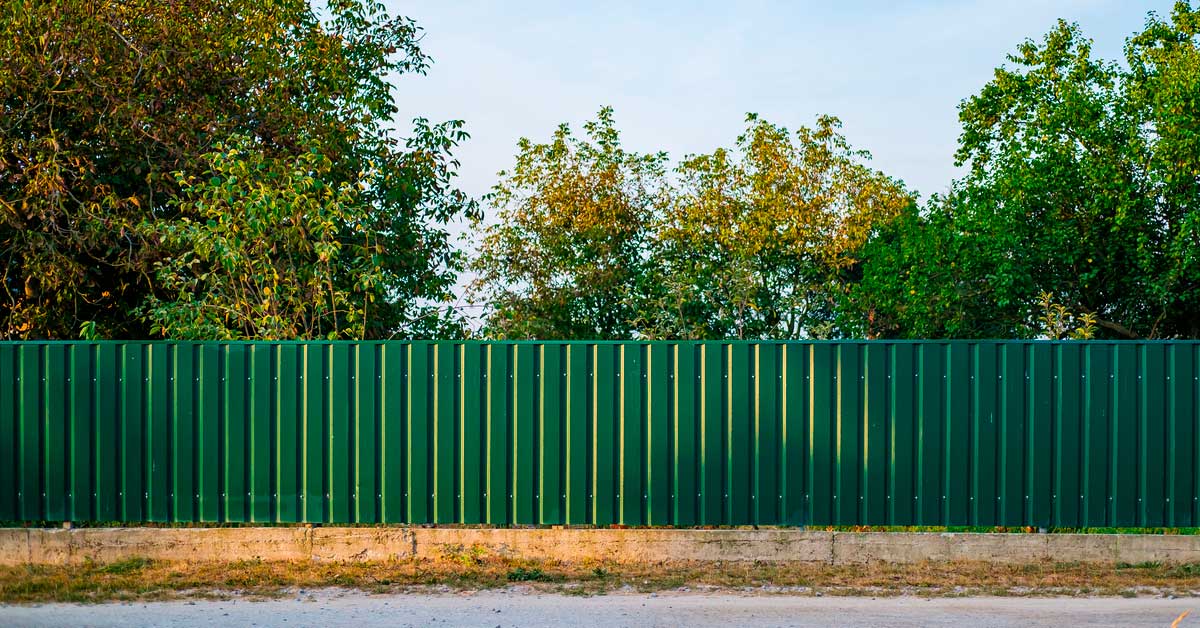
Painted green – Aluminum fence example.
We do not see much of custom fences with aluminum material. Usually its prebuilt sections of fence or standard pickets put together between posts. For those who want to build fence by yourself you can buy sections on amazon or at local home depot store.
Pros:
- Good think about aluminum fence is rockability. This is what we call the ability to install such fence in many positions, ways and options that will be unique from similar product.
- On Point Remodeling team has done research on 8 types of fences and aluminum selection is very easy to install. Get the sections of aluminum fence with attached instructions for DIY projects at home.
Cons:
- There will be no security or feeling of privacy with aluminum fence in your backyard. Even kids with ease can climb this fence. Aluminum pickets and posts are not thick and do not prevent from by walkers seeing through this barrier.
- This is definitely not your forever fence because it can be easily damaged. Aluminum bends without need of a lot of pressure. Just with your body weight you most likely can make dents on it.
Cost: Aluminum material is known to be expensive, but because fences made of aluminum are hollow, the actual cost to install this types of fences is only $40 per linear foot
6. Different PVC Types of Fence
Just like few other fence materials, this comes in sections already premade or in parts to be assembled. They are available throughout the world and you can probably install it by yourself simply by watching youtube videos and following instructions. Many people confuse PVC fence with vinyl, but it actually is totally different material.
Pros:
- We see PVC fencing everywhere. The benefit we wanted to underline is that it comes in many different styles, shapes and colors. Manufacturers have expended options they provide for home owners in most hardware stores.
- If you are trying to save money, but do need fence at home than PVC prebuilt fences are the right choice for you. Online stores should have options with free delivery to your door.
Cons:
- Everyone knows that PVC is very weak material. You can damage it, scratch it, bend it or simply rip it apart if you really wanted to. Disadvantage of this type of fence is its durability.
- The looks of PVC fence are not the best and we put this as the biggest con for it. Simply because of its accessibility and affordable costs, you can spot PVC fence on properties that are on cheap side of the city.
Cost: definitely the cheapest solution for building new fence with price tag of $10 – $15 per linear foot. Hardware stores that sell product can recommend installer for very low cost.
7. Big Store Vinyl Types of Fences
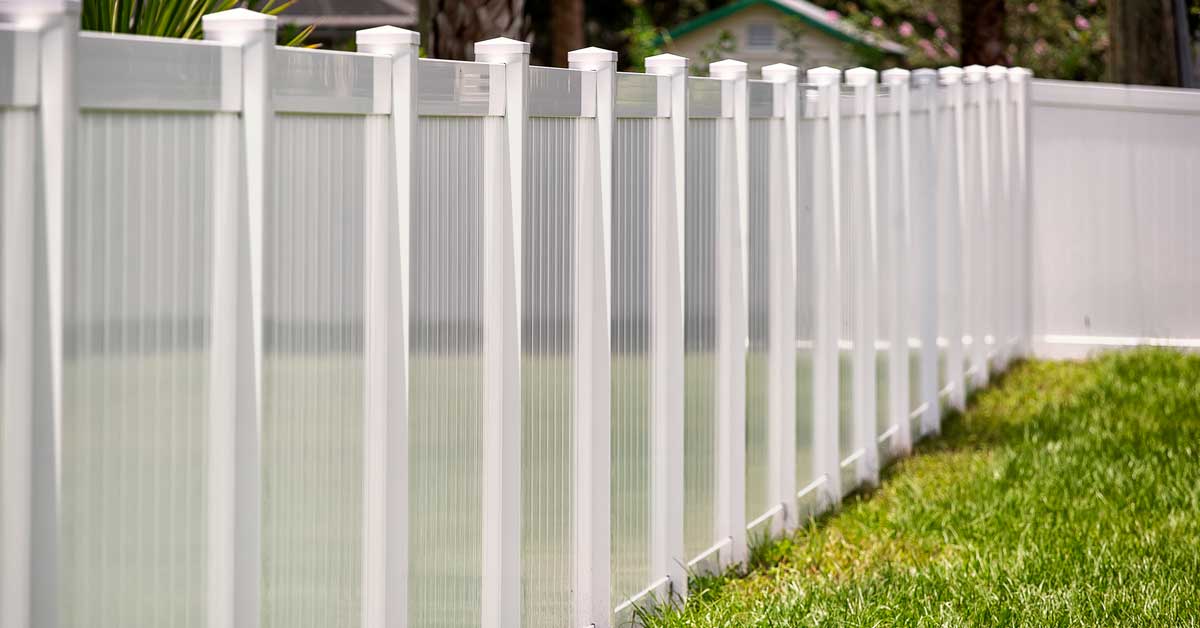
Section built vinyl fence in white color.
To satisfy the need of home owners to build different types of fences on budget, manufacturers came up with vinyl as the material to solve these problems. The material is not environmentally friendly by any means but it serves the purpose and does come with multiple options of styles and colors.
Pros:
- Similar to wood material, vinyl fences are relatively cheap. For those home owners who are on tight budget, this fence may be a good match.
- Availability of this material is one of the greatest benefits. You can find prebuilt fences in almost every city now. You can buy it from Home Depot, Lowes or even online.
Cons:
- Fences on the market with vinyl material are not the greatest for privacy purposes. They are more like separation barriers and railings.
- The appeal of this fence will look exactly for the money you spend. Vinyl fence is one of the least attractive from all the mentioned styles.
Cost: similar to fence described above, vinyl products cost $20 – $30 per linear foot and can be purchased online as well. Hiring handyman or contractor to install vinyl fence will add several hundred dollars on top.
8. Trees and bushes
The cleverest and our suggested material to create a fence separation at your house is to build it with actual trees and bushes. If the purpose of fence for you is creating a barrier and separation that you cannot see through, it is easily achievable with large plants and trees.
Pros:
- Instead of cutting trees to use for new fence, this method is the opposite and actually promotes helping our nature with planting more trees as parts of fence structure.
- Local bylaws could have restrictions on how high or wide your fence should be. When planting trees as a barrier or view separation on your backyard you will avoid all these restrictions and can do whatever you want.
Cons:
- To make your entire fence or separation barrier from trees and bushes takes a long time. There are grown trees that you can purchase and plant as is, but in most situations they grow on your property into something larger to create fence like separation.
- In natural habitat ants and animals will be interested in your new fence. They may eat it; create nests there; casual visit from time to time for snacking on flowers or whatever grows on it.
Cost: the range of fences made with actual trees and bushes is very high. It can be cheap bushes that cost to plan $50 – $100 ever 5 feet or so, or it can be expensive and exotic trees that cost few thousand dollars each.
Conclusion
Tons of different fences exist on market with selections to serve all purposes. All home owners have specific budgets in mind to spend on their fence projects. Some want the most expensive product there is to stand out or maybe increase the home value before sale; some just need some type of separation fence and are looking to build it themselves with most reliable material.
If you have other suggestions for materials that can or should be used for fences, please contact our team by email and we will be happy to add your ideas.
latest video

news via inbox
Nulla turp dis cursus. Integer liberos euismod pretium faucibua